Small Apartment Organization Ideas That Make Everyday Life Easier
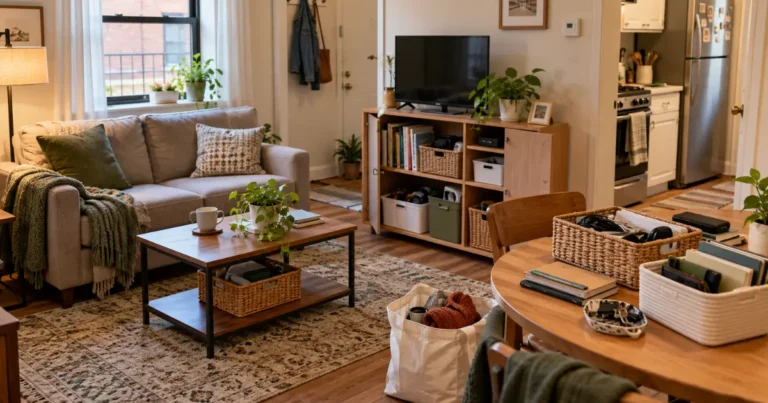
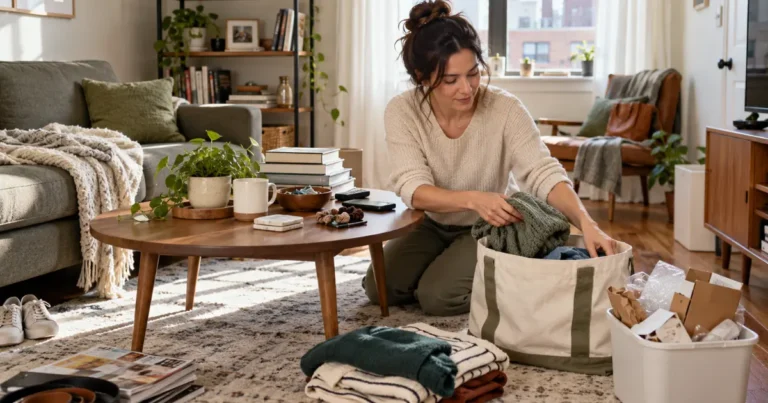
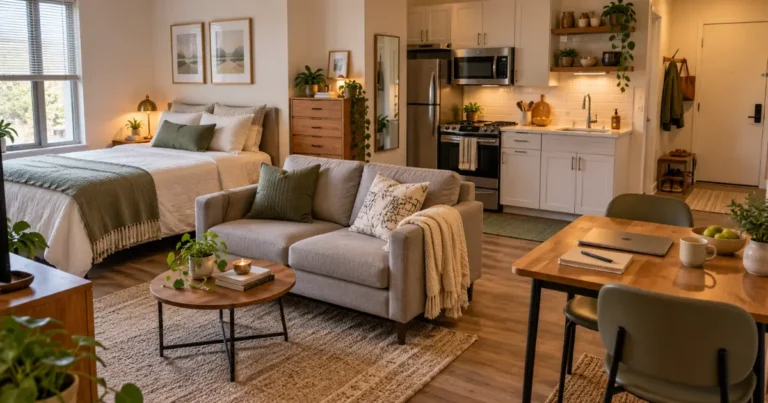
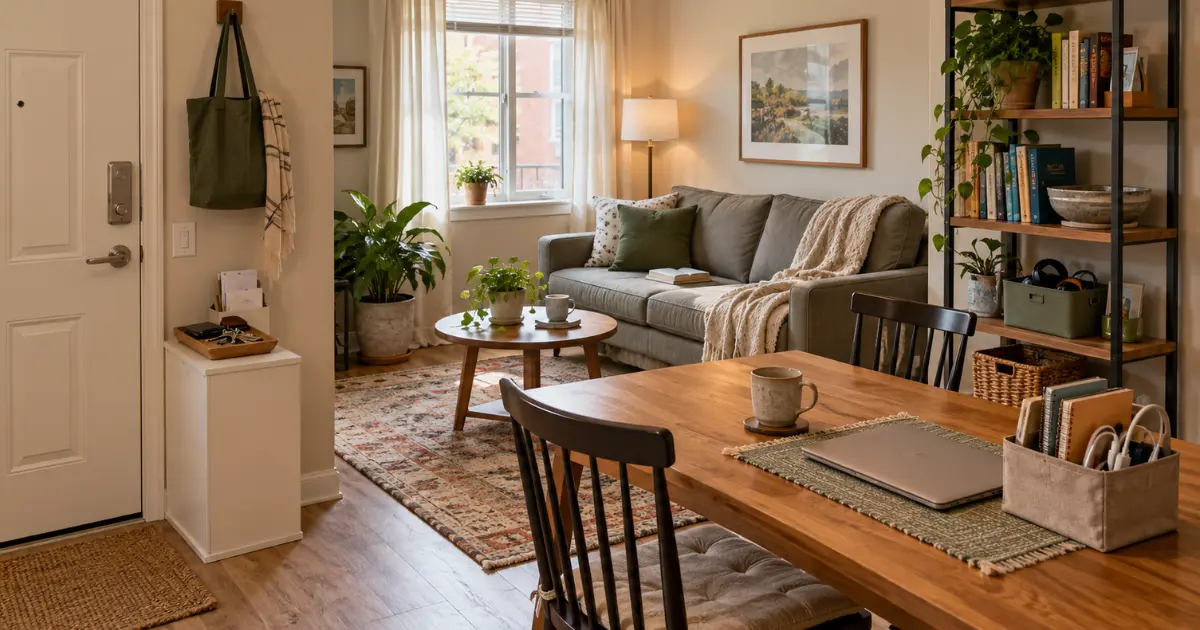
Small apartments make everyday clutter more noticeable. Keys disappear under mail, shared tables collect work supplies, chargers migrate from room to room, and cabinets become difficult to use when unrelated belongings compete for the same space. The most useful small apartment organization ideas solve those specific problems without requiring a full home makeover.
You do not need to implement every suggestion below. Each idea is designed to stand on its own, so you can choose the ones that fit your apartment, routines, budget, and rental restrictions. Many of these ideas make use of furniture, drawers, shelves, trays, or containers you already own.
The goal is not a perfectly styled apartment. It is a home where frequently used belongings are easier to find, surfaces remain usable, and everyday routines require less searching and rearranging.
For a broader understanding of how storage, living areas, and daily routines work together, explore our Small Apartment Organization: A Complete Guide before choosing the individual ideas below.
Table of Contents
Organization Ideas for Apartment Entryways
A small entry can become cluttered quickly because the same few essentials move in and out of the apartment every day. These ideas focus on creating predictable places without turning a narrow entrance into a storage area.
Give Everyday Essentials Predictable Landing Spots
Keys, wallets, sunglasses, and a frequently used bag are easier to manage when they have consistent homes near the entrance.
You might use a shallow tray on an existing console for keys and a wallet, while one sturdy hook holds the bag you carry most often. Keep the landing area deliberately small. If receipts, unopened packages, loose change, and unrelated household items begin accumulating there, it becomes another catchall.
A good landing spot should simplify leaving and returning home while keeping the doorway, handle, and walking path clear.
Separate Incoming Mail From Papers That Need Action
Mail becomes harder to manage when unopened envelopes, receipts, forms, and papers requiring action all collect in one pile.
Give incoming mail one small temporary location, such as a shallow tray or upright holder. Move papers that need attention into a separate folder or upright holder instead of leaving them mixed with newly arrived mail.
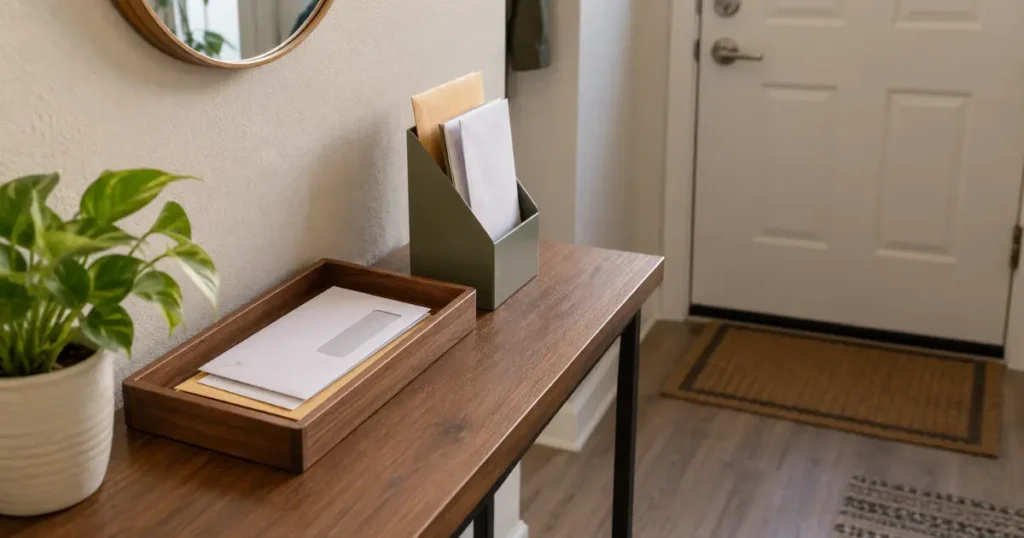
The arrangement does not need to become a complete filing system. Its purpose is simply to prevent a small entry surface from becoming permanent paper storage.
Keep the capacity limited so old mail cannot disappear beneath newer pieces.
Set a Practical Limit for Shoes Kept Near the Door
The entrance usually does not need to hold every pair of shoes you own.
Reserve the area near the door for the shoes currently used most often. Depending on the household, that might mean one or two pairs per person rather than a large collection covering the floor.
Use the storage already available if possible, and keep footwear completely outside the walking route and door swing.
When seasonal or occasional shoes begin accumulating at the entrance, move them to another appropriate location. The purpose is not to create a detailed shoe system but to keep the entry functional.
Organization Ideas for Shared and Multipurpose Spaces
Furniture in a small apartment often serves more than one purpose. The following organization ideas for small apartments help shared surfaces change functions without requiring a major cleanup every time.
Keep Part of a Shared Table Ready for Everyday Use
A dining table that also handles paperwork, laptops, or hobbies can become unusable when one activity permanently occupies the entire surface.
Decide how much of the table needs to remain available for its everyday function. If two people normally eat there, protect enough clear space for meals instead of allowing paperwork to spread from edge to edge.
Materials you’re currently using can stay nearby, but keep them within a defined section or an easy-to-move group.
The objective is not to keep the table empty. It is to prevent one activity from taking control of a surface other household routines also need.
When your apartment is a single main room, these shared-surface challenges can affect almost every daily routine. Our guide on how to organize a studio apartment explains how to coordinate sleeping, working, eating, and relaxing within one flexible living space.
Create a Portable Kit for Work or Study Supplies
If you work or study at a dining table, keep the essentials together in a portable container you can move when the table is needed for something else.
A sturdy caddy or box you already own might hold a notebook, charger, pens, and a few current papers. When work ends, move the entire group instead of gathering several individual items from around the table.
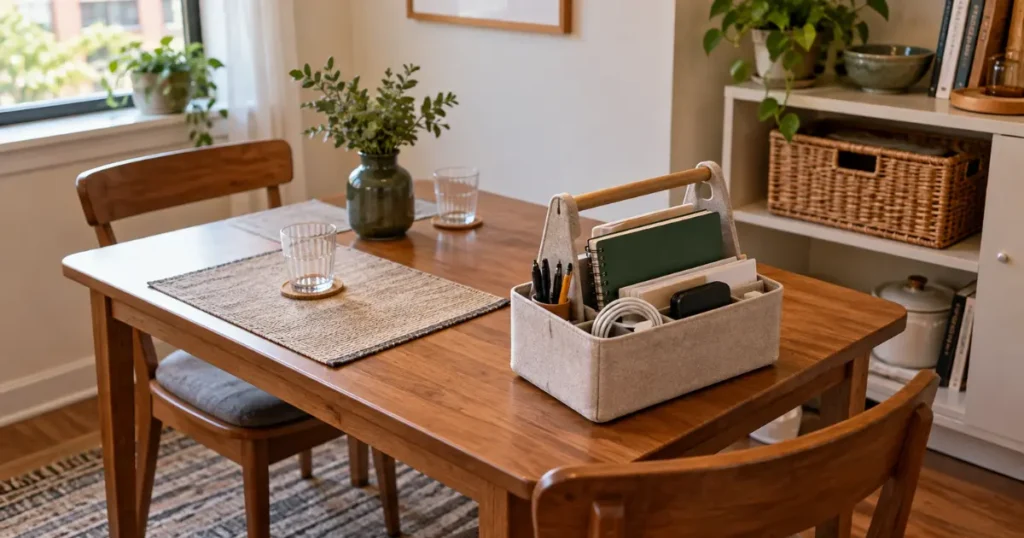
Keep the kit limited to supplies used regularly. If it grows into storage for every office item you own, it becomes too bulky to serve its purpose.
A portable setup works best when it has a consistent place to go after use.
Give Remotes and Charging Accessories Consistent Homes
Remote controls and charging cables are small enough to migrate easily and important enough to cause frustration when they disappear.
Assign each category one obvious location near where it is used. Remotes might share a small tray beside the seating area, while frequently used charging accessories stay in one accessible drawer or compact container.
Avoid burying daily cables behind rarely used electronics or storing them so far away that they are left on furniture instead.
If a cable remains plugged in, route it so it does not cross walking paths or interfere with movement around furniture.
For a broader safety check, the U.S. Consumer Product Safety Commission’s home electrical safety checklist explains why cords should stay out of walking paths and should not be trapped beneath furniture or rugs.
Keep Frequently Used Hobby Supplies Together
A hobby does not always need a dedicated desk or room.
Keep a small set of frequently used supplies together near the place where you enjoy the activity. A reader might keep a current book, bookmark, and reading glasses together. Someone who sketches could keep a sketchbook and a modest pencil caddy in one portable setup.
This applies only to active supplies, not the entire hobby collection.
Keeping the everyday subset together makes it easier to begin and finish the activity without allowing supplies to spread across the apartment.
Organization Ideas for Drawers, Cabinets, and Shared Storage
The best small apartment organization ideas often improve storage you already have instead of adding another piece of furniture.
For broader guidance on making the most of limited storage throughout a compact home, see our guide on how to organize small spaces.
Group Belongings by Activity Instead of Size Alone
Items that happen to be similar in size do not necessarily belong together.
Think about how you use them. A few stamps, envelopes, pens, and return labels may be more useful together as a mailing group than separated into several stationery categories.
Activity-based grouping reduces the number of places you need to check when completing a routine.
Keep the groups broad enough to remain intuitive. Creating too many tiny categories can make a small drawer harder to maintain rather than easier.
Separate Everyday Items From Occasional Extras
Frequently used belongings can become difficult to reach when backup or occasional items occupy the same prime storage space.
Inside a cabinet, for example, keep daily supplies near the front and move less frequently needed extras farther back or to another appropriate level. You are not creating a complete storage hierarchy; you are simply protecting convenient access for what you use most.
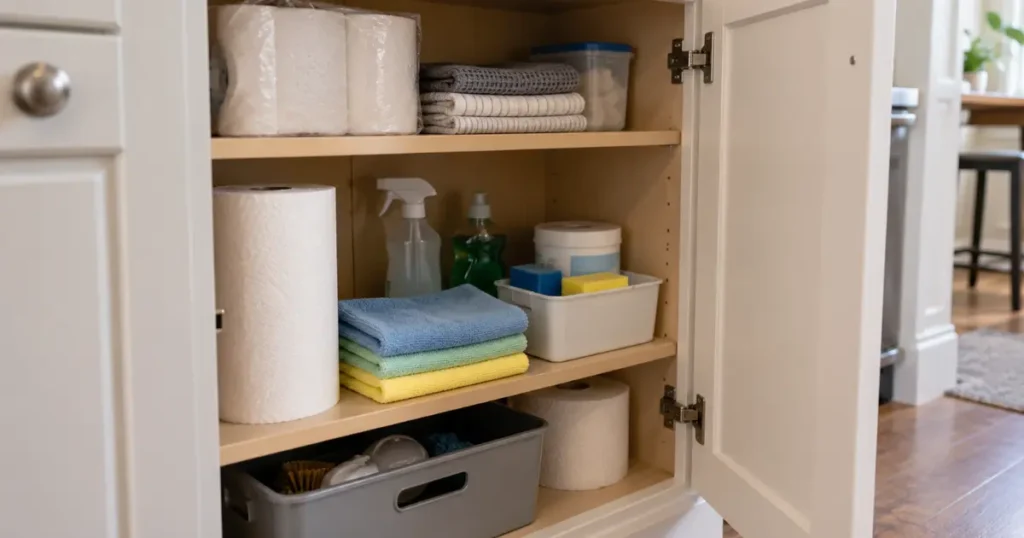
This works particularly well in shared cabinets where a few high-use items repeatedly become buried.
If something must be moved every day to reach another item, reconsider which one deserves the easier position.
Divide Shared Storage by User or Function
Shared storage is easier to maintain when everyone understands which space belongs to whom or which category belongs where.
One bathroom drawer might have a section for shared essentials and separate small sections for individual belongings. A hallway cabinet could divide household supplies by function instead of allowing unrelated categories to mix together.
The division does not have to be perfectly equal. It should reflect actual needs and available space.
Use obvious physical boundaries such as existing shelves, drawer sections, or simple containers rather than creating a complicated system that household members are unlikely to follow.
Label Only the Storage That Is Difficult to Identify
Labels are useful when several containers look similar or when more than one person needs to know what belongs inside them.
A label may help distinguish spare cables from mailing supplies when both live in identical boxes. It may be unnecessary on an open basket whose contents are already obvious.
Use labels to reduce uncertainty, not simply to make storage look coordinated.
Too many labels can make storage look cluttered and require updating whenever categories change. Before labeling, ask whether someone would realistically have trouble identifying the contents without it.
Small Kitchen and Bathroom Organization Ideas
Kitchen and bathroom storage tends to hold many small, frequently used items. A few thoughtful changes can make these essentials easier to reach while keeping limited counter and storage space usable.
Keep Everyday Cooking Tools Near Where They Are Used
Arrange frequently used cooking tools so they are convenient during the tasks they support.
If you reach for a spatula, wooden spoon, and measuring tools several times a week, give them an accessible drawer or suitable nearby location instead of storing them behind rarely used equipment.
Do not assume the countertop is always the best solution. In a small kitchen, preserving some clear preparation space may be more useful than displaying tools.
The simplest improvement may be rearranging an existing drawer so daily items are easier to reach and occasional tools occupy less convenient space.
Assign Clear Areas for Shared Refrigerator Items
When several people share a refrigerator, unclear ownership can lead to forgotten food, duplicated purchases, or one person’s items spreading into everyone else’s space.
Use existing shelves or sections to create understandable boundaries. Some areas can be shared, while another section may hold items belonging to one household member.
Keep the arrangement visible enough that food does not become hidden behind unrelated containers. Personal shelf assignments should never compromise food safety. Keep raw meat, poultry, and seafood properly contained to prevent drips onto other foods. The U.S. Food and Drug Administration provides additional food storage safety guidance for organizing and maintaining a refrigerator safely.
The exact setup depends on the household and refrigerator. Avoid overly rigid divisions if they make it difficult to accommodate changing groceries.
Separate Active Toiletries From Unopened Backups
Daily toiletries are easier to use when unopened backups do not crowd the same accessible area.
Keep current products near the sink, shower, or cabinet location where they are normally used. Extras can occupy another section of the existing cabinet or another appropriate storage area.
This makes it easier to see which products are already open and keeps the most accessible space available for everyday use.
You do not need a special container for every product. The useful distinction is simply between what is currently in use and what is waiting to replace it.
Bedroom Organization Ideas for Everyday Routines
Small bedroom habits can make a noticeable difference in how comfortably the space functions. Giving everyday belongings consistent places helps keep furniture usable and prevents temporary clutter from building up.
Give Once-Worn Clothing a Defined Temporary Location
Clothes you’ve worn once but plan to wear again often end up on a chair, bed, or floor because they don’t belong with freshly washed clothes or dirty laundry.
Give them one limited temporary location. Depending on the apartment, that might be a designated section of an existing hook rail, one small basket, or another contained place that does not interfere with movement.
Keep the boundary small. If the location begins holding a week’s worth of clothing, review the contents instead of simply expanding it.
The purpose is to prevent a temporary category from becoming permanent bedroom clutter.
Keep Bedtime Essentials Accessible Without Crowding the Nightstand
A nightstand is more useful when it holds the few things genuinely needed around bedtime rather than becoming general bedroom storage.
Prioritize current essentials such as a lamp, reading glasses, a book, or another item you use regularly. Move unrelated paperwork, old cups, spare electronics, and other items that have collected there to more appropriate places.
If the nightstand has a drawer, use it for small items that are useful nearby but do not need to remain visible.
If your bedroom is too small for a conventional nightstand, our guide to small bedroom shelving ideas explores compact bedside shelves and other practical options that can provide accessible storage without unnecessarily crowding the floor.
The goal is not an empty surface. It is enough clear room to use the furniture comfortably.
Put the Laundry Hamper Where It Is Convenient to Use
A hamper works better when its location matches where clothing is normally removed.
If it is placed in an inconvenient corner or behind furniture, clothes are more likely to land on a chair or floor instead.
Choose a location that is easy to reach but does not narrow an important walkway or interfere with doors and drawers. In a very small bedroom, that may mean using an existing corner more deliberately rather than adding more furniture.
When the hamper is easy to reach, putting worn clothes in it becomes a simple habit rather than an extra chore.
How to Choose the Right Ideas for Your Apartment
You do not need to use all 17 suggestions. Start with the problem you notice most often.
If keys disappear every morning, improve the entry landing spot. If the dining table never clears, concentrate on portable work materials. If a shared cabinet creates repeated confusion, clarify who or what each section serves.
Before adopting an idea, consider whether it fits the available dimensions, whether you can retrieve and return items easily, whether existing furniture can support the change, and whether everyone using the area can understand the arrangement.
Before buying another organizer, consider whether a tray, sturdy box, or other suitable container you already own could serve the same purpose. The U.S. Environmental Protection Agency’s guidance on reducing and reusing waste also encourages reusing everyday items to reduce unnecessary waste.
Renters should also consider lease restrictions before drilling or making permanent alterations.If you use adhesive hooks, wall-mounted organizers, or other storage products, check the manufacturer’s installation instructions, surface requirements, and weight limits.
A useful change should remove everyday friction, not create a more elaborate system to maintain.
If your main challenge is insufficient storage rather than misplaced belongings, explore our small apartment storage ideas for ways to make better use of shelves, furniture, narrow spaces, and other available storage areas.
If several areas of your apartment need attention and you’re unsure where to begin, our guide on how to organize a small apartment provides an eight-step process for tackling one manageable area at a time.
Frequently Asked Questions
What are the easiest small apartment organization ideas to try first?
Start with low-effort changes that address a repeated inconvenience: give keys a consistent landing spot, clear part of a shared table, move frequently used items to easier-to-reach storage, or give remotes and chargers predictable homes.
These changes can usually be tested with existing furniture and containers before you buy anything new.
How can I organize a small apartment without buying new storage products?
Reassign existing drawers and shelves, repurpose a suitable tray or sturdy box, group related items where they are used, and remove unrelated belongings from high-use surfaces.
You may already have enough storage space, but some of the easiest-to-reach areas could be occupied by things you rarely use.
What organization ideas work in an apartment where I cannot drill into the walls?
Focus on freestanding furniture, existing drawers and shelves, portable caddies, trays, baskets, and other arrangements that do not require permanent wall attachment.
Over-the-door or removable products may sometimes be options, but check door clearance, product instructions, surface suitability, and your rental rules rather than assuming every product is appropriate or damage-free.
How can roommates keep shared apartment spaces organized?
Give common belongings obvious homes that everyone can reach and understand. Everyone should know where to find shared items such as remotes, chargers, cleaning supplies, and household paperwork.
Keep expectations simple. It is usually easier to maintain a few clear shared categories than a highly detailed system that requires everyone to remember many rules.
Conclusion
The most effective small apartment organization ideas solve real everyday problems without making the apartment harder to live in. A predictable place for keys, a portable work kit, a clearer shared drawer, or a better location for the laundry hamper can improve a routine without requiring a major purchase or renovation.
Choose the ideas that match the way you actually use your apartment. Ignore the ones that do not fit your space or household. Good organization is not about implementing every possible system; it is about making frequently used belongings easier to find, use, and return while keeping the home comfortable and functional.