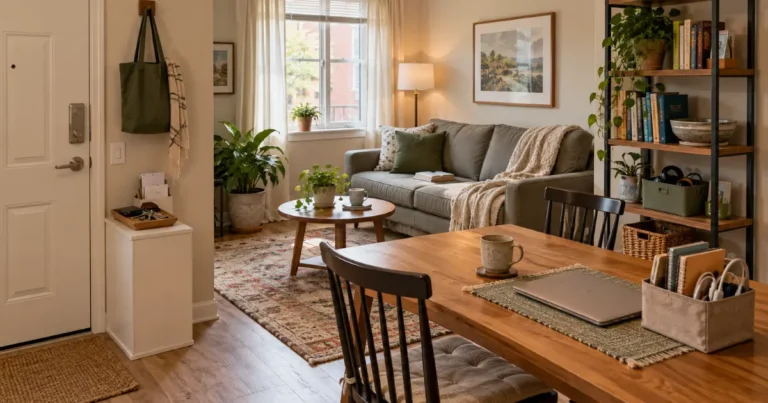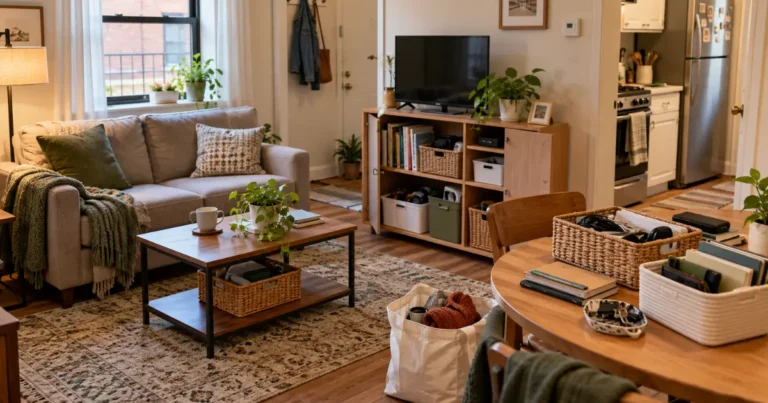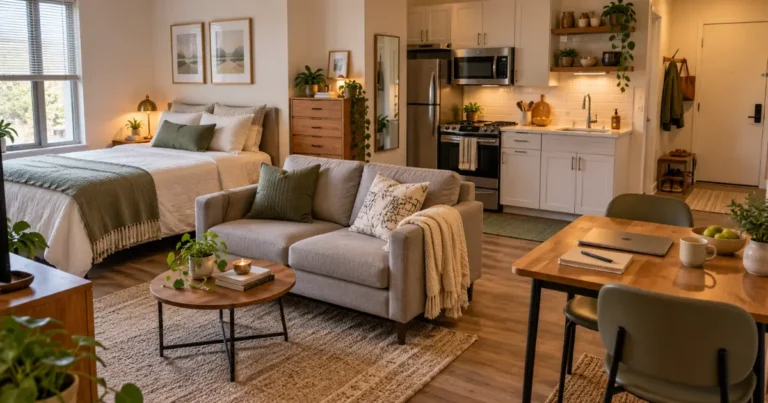
Small Apartment Storage Ideas That Make Every Inch Count
Limited cabinets, crowded surfaces, awkward corners, and furniture competing for floor space can make storage feel like a constant problem in a compact home. The most useful small apartment storage ideas are not about covering every wall with shelves or buying more bins. They help you use the space you already have more intentionally while keeping everyday belongings accessible.
Before adding storage, consider what actually needs a home, how often you use it, and what physical space is available. A storage solution may fit the available space but still create problems if it blocks a doorway, prevents a drawer from opening fully, or puts frequently used items out of reach.
The ideas below focus on realistic American apartments, including rentals where permanent alterations may be limited. Use the options that solve a genuine storage problem in your home, and skip the ones that would make the space more crowded or complicated.
Quick Small Apartment Storage Plan
- Decide what genuinely needs storage before buying organizers.
- Measure width, depth, height, door swing, and walking clearance first.
- Use vertical space selectively without putting everyday items out of reach.
- Look for useful space under beds, inside furniture, and in narrow gaps.
- Choose multifunctional furniture only when the additional storage is easy to access.
- Check rental rules and product installation instructions before mounting anything.
- Choose storage that makes belongings easy to find, take out, and put away—not just hide from view.
Table of Contents
Start With Your Available Space Before Buying Storage Products
Good storage for small apartments begins with the apartment itself, not the organizer aisle.
Start by identifying the belongings that genuinely need a storage location. Consider what you use regularly, what you need to keep accessible, and what can be stored less prominently. This will help you choose storage based on actual needs rather than simply adding more furniture.
Next, measure the space you are considering. Check:
- width, depth, and height;
- whether nearby doors or drawers can still open;
- how far the new storage would project into the room;
- whether chairs or furniture need clearance around it;
- and whether the walking path will remain comfortable.
This is especially important with larger storage furniture. A deep cabinet may provide more theoretical capacity but make a narrow living area harder to navigate.
Think about access as carefully as capacity. Storage should support the way you use the apartment. A frequently used item stored behind three containers is not especially functional, even if the arrangement looks efficient.
For a broader understanding of how storage decisions fit into everyday routines, living areas, and apartment organization, see our Small Apartment Organization: A Complete Guide.
Before you buy anything, ask a basic question: What specific category will this storage hold? If you cannot answer clearly, the organizer may become another object competing for limited space.
If excess belongings are the main reason storage feels inadequate, reducing that volume first may be more useful than adding capacity. Our step-by-step guide on how to declutter a small apartment explains how to make keep-or-remove decisions and clear unwanted belongings before investing in more storage.
Use Vertical Storage Without Crowding the Room
Vertical space can be valuable because walls and tall furniture use less floor area than many low, wide storage pieces. But using height well does not mean filling every wall from floor to ceiling.
The most effective vertical storage solutions for small apartments balance capacity with visibility, reach, installation requirements, and stability.
Add Wall Shelves Where Installation Is Appropriate
A few wall shelves can hold books, lightweight household items, small decor, or belongings that do not need to live on the floor.
They work best when the wall is suitable, the shelves do not project into a narrow walkway, and the stored items can be reached safely.
If you rent, confirm whether drilling or wall mounting is permitted before installation. Use hardware appropriate to the wall type and follow the shelf manufacturer’s installation and load guidance rather than guessing how much weight it can support.
Wall shelves may be unsuitable above seating or sleeping areas, where falling objects could cause injury. They are also less practical when installed so high that frequently used items are difficult to reach.
Use them for a defined need, not simply because a wall is empty.
If you’re considering shelves for a compact bedroom, explore our small bedroom shelving ideas for guidance on floating shelves, bedside shelves, corner shelving, and narrow freestanding units, including placement, measurements, and installation safety.
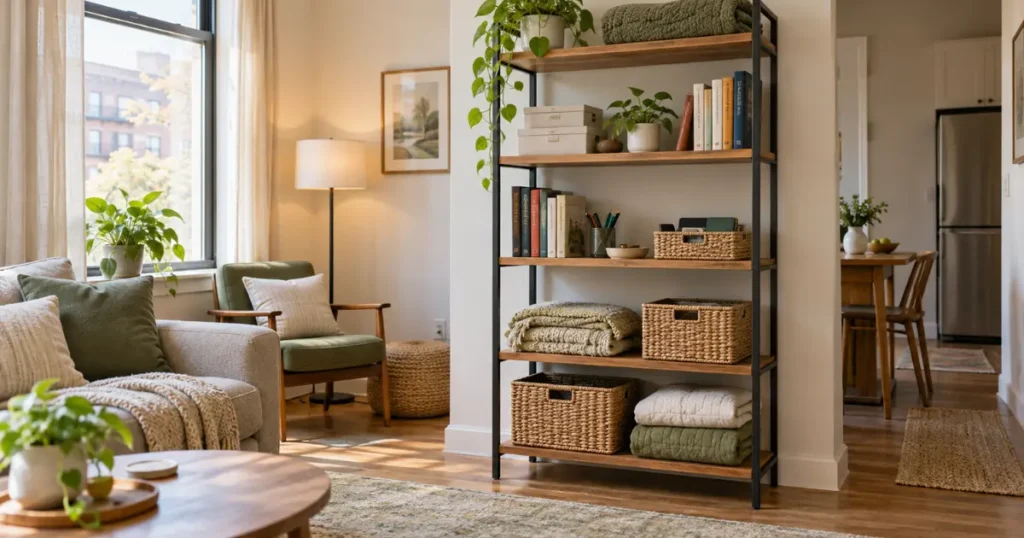
Use Freestanding Tall Shelving Units
A tall bookcase or shelving unit can create several levels of storage while using a relatively small footprint.
Place frequently used belongings on the easiest-to-reach shelves and reserve higher or lower levels for items you need less often. Leave enough open space on each shelf to remove and return belongings without rearranging everything around them.
Measure both the footprint and the height before bringing the unit into the apartment. Also consider how the furniture will behave on the actual flooring and where it can be positioned without interfering with vents, switches, doorways, or windows.
Tall shelving units can tip over, especially when heavily loaded or pulled on. Follow the manufacturer’s instructions for assembly, weight limits, and anti-tip anchoring, and keep heavier belongings on lower shelves. For additional safety information, see the U.S. Consumer Product Safety Commission’s furniture tip-over prevention guidance.
Consider Over-the-Door Organizers
The back of a suitable door can provide useful storage without taking up floor space.
Depending on the door and organizer, it may work for lightweight items such as scarves, accessories, cleaning cloths, small toiletries, or frequently used household supplies.
Check the door clearance first. An organizer that prevents the door from closing properly, rubs against the frame, or interferes with the handle creates a new problem.
Over-the-door storage is also less appropriate when it makes a lightweight door difficult to operate or places too much weight on the top edge.
If the organizer uses hooks, adhesive, or other contact points, follow the product instructions and check whether the material is suitable for the door finish.
Make Better Use of Existing Cabinet Height
Some cabinets waste vertical space because short belongings sit on a tall shelf with a large empty gap above them.
A stable shelf riser can sometimes create a second usable level for lightweight items, allowing plates, mugs, pantry goods, or household supplies to remain visible without being stacked into tall piles.
This works only when the riser fits securely and both levels remain easy to access.
Avoid creating layers so tight that reaching the lower items requires removing everything above them.
The goal is to make existing cabinet space more useful, not to fill every available inch.
Take Advantage of Under-Bed and Other Low-Profile Storage
Low-clearance areas can be useful for belongings that do not require daily access.
Before buying an under-bed container, measure from the floor to the lowest part of the bed frame. Also check whether the container can be pulled out completely without hitting a wall, dresser, or other furniture.
Good candidates may include:
- off-season textiles;
- spare bedding;
- occasional accessories;
- or other lightweight belongings used periodically.
Choose containers that protect their contents from dust and can be pulled out comfortably without excessive lifting or dragging.
Under-sofa storage may also work in some apartments if the furniture has adequate clearance. However, avoid wedging belongings underneath mechanical parts, blocking vents, or placing items where they are difficult to retrieve.
Hidden low-profile storage is most useful for occasional belongings. Items you need every morning should usually have a more convenient home.
If you’re considering replacing your existing bed rather than adding removable containers underneath it, explore our guide to storage beds for small bedrooms. It compares built-in drawers, lift-up compartments, and other configurations to help you decide whether a storage bed would provide genuinely useful space in your room.
Choose Furniture That Provides Useful Hidden Storage
Furniture with integrated storage can be helpful when it replaces the need for a separate storage piece.
The important question is not whether the furniture has a storage feature. It is whether that storage is practical in your specific room.
Storage Ottomans and Benches
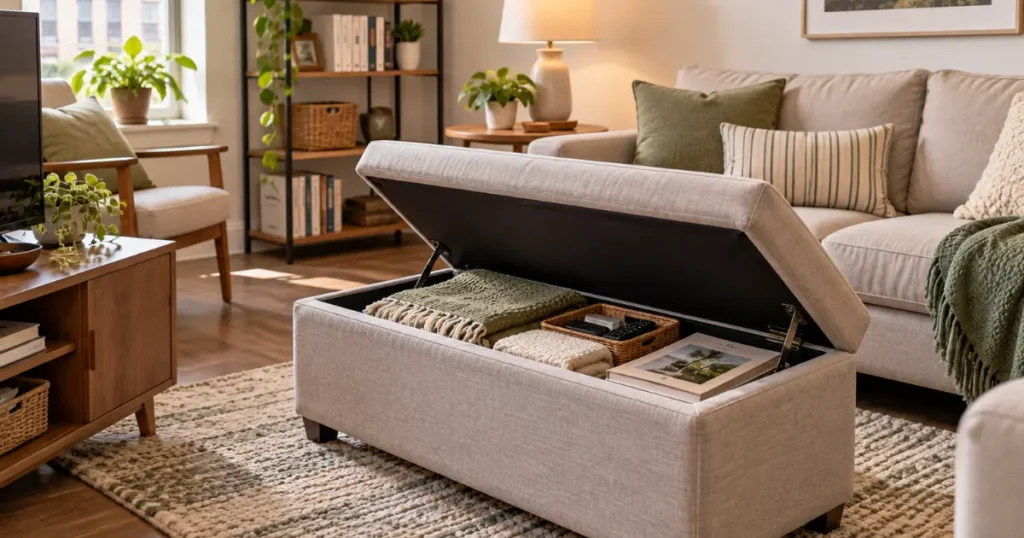
A storage ottoman can provide a footrest and enclosed storage in one footprint, and some models can also serve as seating when designed for that purpose.
It may work well for throws, a few games, occasional accessories, or other lightweight living-area belongings.
Check how the lid opens and whether there is enough clearance to use the interior comfortably. If the ottoman must be dragged away from other furniture every time you need something, the storage may be less useful than it first appears.
A storage bench can serve a similar purpose near an entry or another suitable area, but only if it does not narrow an already tight passage.
Coffee Tables With Storage
Coffee tables with drawers, open shelves, or lift-top compartments can keep frequently used living-room items close to where they are needed.
A drawer may work for remotes and chargers. An open lower shelf may hold a limited number of books or a small basket. A lift-top design may offer additional concealed storage while also creating a temporary work surface.
Consider how the table opens and how much clearance the mechanism requires.
If the furniture is heavy, oversized, or difficult to move around, extra storage may not justify the floor space it consumes.
Beds With Built-In Storage
Beds with integrated drawers or lift-up compartments can provide useful storage for clothing, spare bedding, or seasonal items, sometimes reducing the need for a separate dresser or cabinet.
Drawer-style beds need enough open floor area beside them for the drawers to extend fully. A bed that fits between two walls may not actually provide usable drawer storage if there is no clearance.
Lift-up designs can provide larger enclosed space, but the mechanism should be easy for the intended user to operate according to the manufacturer’s instructions.
Beds with storage are most useful when the feature replaces another storage need rather than simply adding a place to accumulate more belongings.
Compact Multipurpose Furniture
A small piece that performs two useful functions can sometimes reduce the total amount of furniture needed.
Examples might include:
- a bench with storage;
- a side table with a drawer;
- a compact console that also supports household paperwork;
- or seating with an accessible storage compartment.
Avoid assuming that more features automatically make furniture better for a small apartment. A complicated multifunctional piece may be larger, heavier, or less convenient than two simple items.
Choose furniture based on the functions you actually use.
Use Narrow Gaps and Overlooked Apartment Spaces
Some of the most practical apartment storage ideas use small areas that are otherwise difficult to furnish.
These spaces are helpful only when the storage remains accessible and does not interfere with appliances, ventilation, utilities, or movement.
Slim Rolling Carts for Suitable Gaps
A narrow rolling cart may fit beside a desk, cabinet, washer, or other piece of furniture where a standard cabinet would be too wide.
Before choosing one, measure the complete gap—not just the width. Check depth, height, handles, baseboards, and anything protruding from the wall.
Choose a cart whose wheels move smoothly across your flooring and whose frame remains stable when loaded within its rated capacity.
Slim carts are most useful for small, related belongings that you need to pull out as a group. They are less useful when they create a deep, narrow pile that is difficult to see or when the gap contains plumbing, electrical equipment, or ventilation that must remain accessible.
Narrow Shelves and Compact Cabinets
A shallow shelf or slim cabinet can sometimes provide storage along a wall without projecting as far into the room as standard furniture.
They can work for books, paperwork, small household supplies, or items associated with a nearby activity.
Measure the depth carefully. Even several extra inches can matter in a narrow hallway or beside a dining area.
Do not place narrow furniture where it makes people turn sideways to pass or where open doors and drawers would block circulation.
Hooks and Racks for Everyday Items
Hooks can provide useful homes for lightweight items such as bags, jackets, towels, or frequently used accessories.
Place them close to where the items are actually used while keeping door swings and walking routes clear.
Renters should verify whether drilling is permitted. Adhesive or removable hooks may be suitable for renters, but they can still damage paint or certain wall finishes during removal.
Follow the product’s surface-preparation, weight, and removal instructions.
Improve Kitchen Storage Without Expanding Its Footprint
Compact kitchens often have little room for additional furniture, so improving the cabinets and drawers already present can be more effective than adding another cart or freestanding unit.
Useful options may include cabinet shelf risers for lightweight items, drawer dividers for small utensils, and vertical dividers that keep cutting boards or baking sheets upright rather than stacked.
Under-shelf baskets can make use of otherwise empty space, but they must fit securely, stay within the shelf’s supported load, and leave enough clearance for items below.
The inside of a cabinet door may also offer limited storage for lightweight items if the organizer fits without hitting shelves, contents, hinges, or nearby drawers when the door closes.
Stackable containers may improve storage in small apartments when their dimensions suit the cabinet and the contents remain easy to identify. Matching containers are not necessary for effective storage.
A practical cabinet should let you see, reach, and return what you use. If stacking makes a shelf look tidy but requires dismantling the arrangement every time you cook, it is not helping.
Make Bathroom Storage More Functional
Bathrooms combine limited space, plumbing, moisture, and many small belongings, so storage choices need to account for more than capacity.
A suitable over-toilet shelving unit can make use of vertical space, provided it fits around the fixtures, remains stable, and is installed or secured according to the manufacturer’s instructions.
Compact wall shelving may also help where installation is allowed and appropriate. Keep frequently used toiletries within comfortable reach rather than using every high wall area simply because it is available.
Under-sink storage can benefit from small bins or modular arrangements, but plumbing should remain accessible and nothing should press against pipes or conceal a leak.
Narrow organizers can fit beside a vanity or other suitable fixture if they do not obstruct movement.
Use materials suited to the bathroom environment and follow installation guidance for anything mounted.
Avoid storing so much under a sink or around plumbing that routine cleaning, inspection, or access becomes difficult.
Keep Entryway Storage Compact and Accessible
An apartment entrance needs enough storage to support coming and going without turning into a crowded holding area.
A slim shoe rack or narrow shoe cabinet may work if it keeps regularly used footwear out of the walking path.
Keys may need only a small tray or appropriately installed hook. Bags and lightweight outerwear can sometimes use a compact hook rail or freestanding rack.
A small storage bench can combine seating and storage where the entry is wide enough, but it is not appropriate in every apartment. In a very narrow entrance, even a slim bench may create more inconvenience than storage value.
Keep door hardware, locks, switches, and exit routes fully accessible. The U.S. Fire Administration’s home fire escape planning guidance also recommends keeping doors and windows unobstructed so residents can leave quickly during an emergency.
Entry storage should make departures easier, not create an obstacle immediately inside the home.
Use Flexible Storage for Living Areas and Shared Spaces
Living rooms and shared areas often serve several purposes, so storage should be able to support changing activities.
A compact shelving unit may hold books, current hobby supplies, or shared household items. Closed cabinets can reduce visible clutter for categories that do not need to remain on display.
A small rolling cart can hold work supplies, hobby materials, or other frequently used items and move between activity areas, provided there is a suitable place to store it when not in use.
Baskets can be useful for a limited, clearly defined group of belongings, but large baskets should not become deep catchalls for unrelated objects.
Furniture with integrated storage can also reduce the need for another cabinet, especially when the storage is close to the activity it supports.
Protect access to sofas, dining chairs, work surfaces, and pathways. Storage should support a multipurpose room rather than gradually occupying the room itself.
If everyday belongings keep collecting on shared tables, entry surfaces, or furniture, explore our small apartment organization ideas for practical ways to give those items consistent homes without adding unnecessary storage furniture.
Choose Storage Solutions That Work for Renters
Depending on the lease and property rules, renters may face restrictions on drilling, wall mounting, painting, or making permanent changes.
Start with reversible options when possible:
- freestanding shelves;
- portable carts;
- existing cabinets;
- baskets or bins inside furniture;
- over-the-door organizers where clearance allows;
- and multifunctional furniture that can move with you.
“Renter-friendly” and “damage-free” are not always the same thing.
An adhesive product may be removable according to its instructions, but wall finish, paint condition, humidity, application, and removal methods can affect the result.
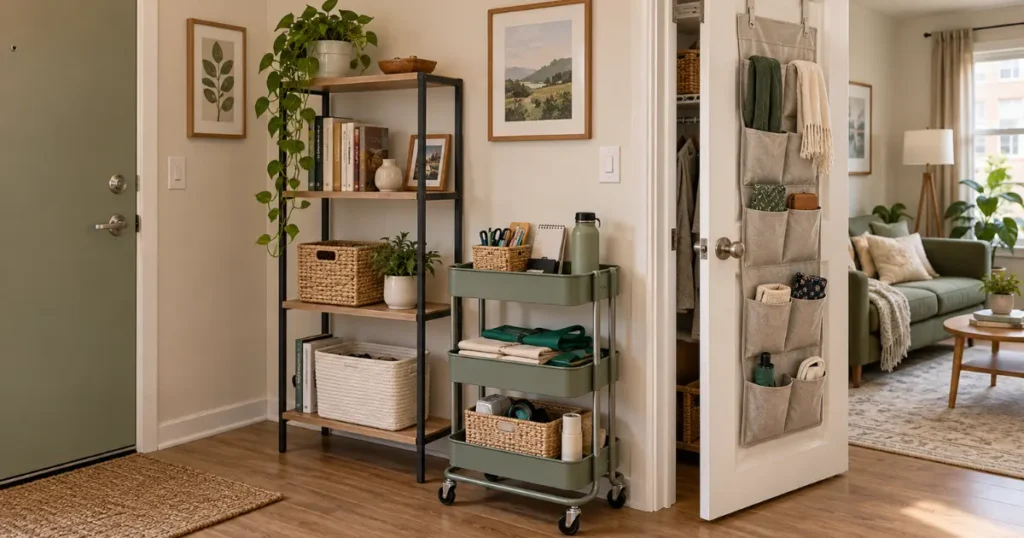
Check your lease or ask the property manager before making alterations when you are uncertain. If a shelving unit requires wall anchoring, don’t assume that leaving it unsecured is a safe renter-friendly alternative. The CPSC’s furniture anchoring instructions explain the installation process. Check your lease or consult your property manager about appropriate installation arrangements.
The most practical renter-friendly storage can usually be removed or rearranged without requiring the apartment itself to be redesigned.
Common Small Apartment Storage Mistakes to Avoid
Adding more storage can make a small apartment harder to use when it reduces accessibility or takes up valuable walking space.
Common mistakes include:
- Buying organizers before measuring. Even small products can interfere with drawers, doors, or nearby furniture.
- Ignoring walkways and door clearance. Storage is not useful if people have to squeeze around it.
- Choosing furniture that is too deep or bulky. More internal capacity can result in less usable room overall.
- Overloading shelving. Stay within the manufacturer’s stated weight limits, distribute belongings appropriately, and follow installation and anchoring instructions.
- Creating storage that is difficult to access. An arrangement that requires several steps to reach one item will be hard to maintain.
- Using hidden storage for daily essentials. Hard-to-reach areas generally work better for occasional-use belongings.
- Putting too much above comfortable reach. Vertical storage is helpful only when retrieval remains practical and safe.
- Buying a container without knowing what it will hold. Undefined storage often becomes another catchall.
How to Choose the Right Storage Idea for Your Apartment
The best small apartment storage solutions depend on what you need to store and how your apartment functions.
Before choosing one, work through a simple decision check:
- Identify the category. Know exactly what the storage needs to hold.
- Measure the available space. Include clearance for doors, drawers, furniture, and movement.
- Consider access frequency. Daily items should be easier to reach than seasonal or occasional belongings.
- Check installation requirements. Make sure the storage solution suits the surface where it will be installed. If you rent, confirm that the installation is permitted under your lease or property rules.
- Consider stability and safe use. Follow the manufacturer’s instructions for assembly, installation, and loading.
- Think about cleaning and maintenance. Storage should not make it unnecessarily difficult to reach the floor, plumbing, or other areas that need regular access.
- Consider long-term usefulness. A very specialized organizer may be less valuable than a flexible piece that can adapt as your needs change.
- Compare cost with practical benefit. A more expensive solution is not automatically more useful.
A storage idea is successful when it improves access and keeps the apartment functional—not simply when it creates the highest possible capacity.
If you still need to sort your belongings and decide where each category belongs, start with our guide on how to organize a small apartment before purchasing additional storage products.
Frequently Asked Questions
What is the best way to add storage to a small apartment?
Start with the space and furniture you already have. Improve existing cabinets and shelves, use suitable vertical or low-profile areas, and identify specific categories that genuinely need more capacity.
Only add new furniture or organizers after measuring the space and confirming that the additional storage will remain easy to access.
How can I increase storage without buying large furniture?
Look for opportunities inside existing cabinets, under suitable furniture, on appropriate doors, or along narrow wall areas.
Shelf risers, drawer dividers, compact hooks, over-the-door organizers, and low-profile containers may add useful capacity without introducing another large cabinet.
The exact solution should fit the apartment rather than simply being marketed for small spaces.
What are renter-friendly storage ideas for small apartments?
Freestanding shelves, portable carts, existing-furniture storage, over-the-door organizers, and multifunctional furniture can often be used without permanent alterations.
Wall-mounted or adhesive options require more caution. Check rental rules, product instructions, surface compatibility, and installation requirements before using them.
How do I store belongings in a small apartment without making it feel crowded?
Avoid filling every available wall, shelf, and corner.
Keep frequently used items accessible, reserve some open space around storage, choose furniture proportionate to the room, and use concealed storage selectively for categories that do not need to remain visible.
Leaving some open space around furniture and storage areas can make the apartment easier to navigate and keep tidy.
Is vertical storage suitable for every small apartment?
No. It works best when the wall, furniture, installation method, and stored items are appropriate.
Very high storage can be inconvenient for everyday belongings, and wall-mounted solutions may not be permitted in some rentals.
Use vertical space where it improves function rather than automatically filling every blank wall.
Should I buy storage containers before organizing my belongings?
Usually, it’s better to identify what you need to store and where it will go before buying containers.
Once you know the category, quantity, location, and available dimensions, you can determine whether a container is actually necessary and what size or type would be useful.
Buying organizers before defining the problem can add more objects without improving the apartment.
Final Thoughts: Choose Storage That Makes Your Apartment Easier to Use
The strongest small apartment storage ideas are not the ones that fit the most possessions into the smallest possible area. They are the ones that make important belongings easier to reach while preserving comfortable movement and everyday usability.
Measure before buying. Use vertical, hidden, and overlooked spaces selectively. Check stability, installation requirements, and rental restrictions. Most importantly, make sure each storage solution has a clear purpose.
A useful next step is simple: choose one underused area in your apartment, measure it carefully, and identify the specific belongings that could realistically live there before deciding whether you need anything new.