How to Declutter a Small Apartment: A Step-by-Step Guide
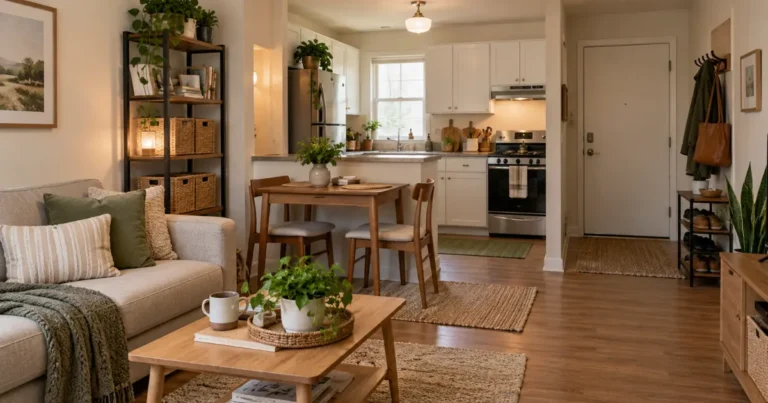
In a small apartment, clutter does more than make a room look untidy. Extra belongings can crowd countertops, Extra belongings can crowd countertops, overfill drawers, block walkways, and make everyday items harder to find. Learning how to declutter a small apartment therefore requires a different approach from emptying an entire room and sorting everything at once.
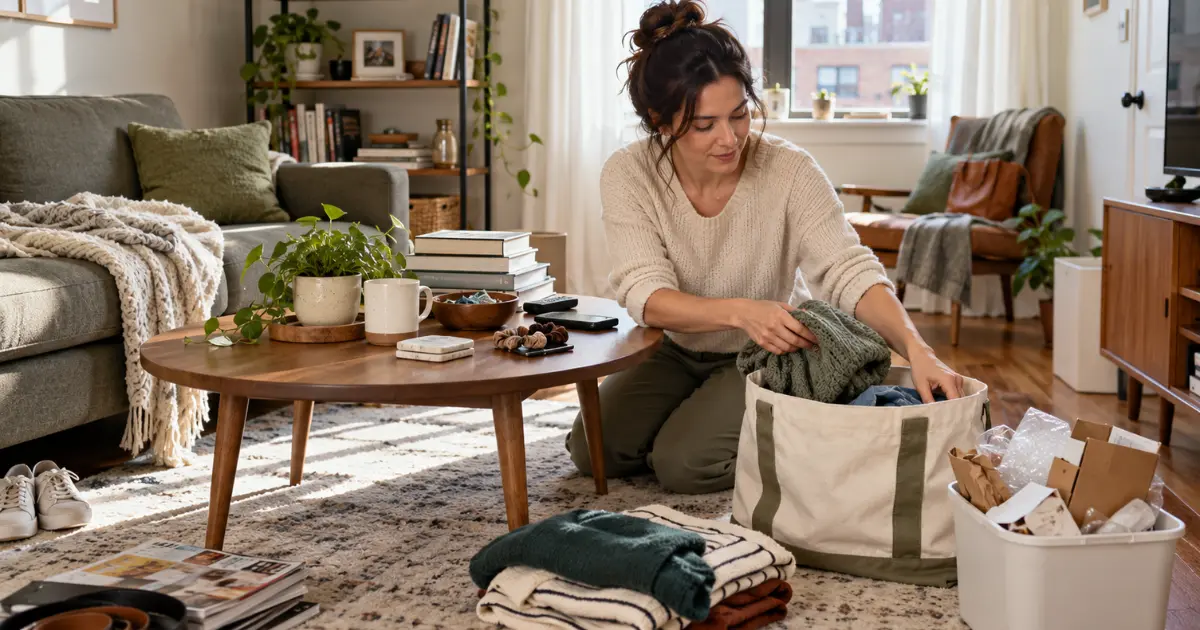
When floor space is limited, a huge sorting project can create more disruption than progress. A better method is to work in small, controlled sections: identify the clutter causing the most trouble, choose one manageable target, make clear keep-or-remove decisions, and get unwanted items out of the apartment before opening another area.
This guide walks you through that process from beginning to end so you can reduce excess belongings without turning your home into a temporary warehouse of piles and boxes.
Quick Apartment Decluttering Plan
- Start with the clutter that interferes most with daily life.
- Choose one small drawer, shelf, surface, or zone you can finish.
- Use a simple keep, donate/give away, recycle/discard, and decision-later system.
- Remove only as much as you can sort safely in the space available.
- Evaluate belongings based on current usefulness, condition, duplication, and personal value.
- Arrange to donate, recycle, or dispose of unwanted items promptly instead of letting them pile up.
- Return only the belongings you are keeping, then finish that area before starting another.
Table of Contents
Why Decluttering a Small Apartment Requires a Different Approach
A small apartment leaves less room not only for your belongings but also for the process of sorting through them.
In a larger home, someone may be able to empty a closet into a spare room or spread several categories across a basement floor. In a compact apartment, those same belongings may end up covering the bed, sofa, dining table, or only clear walkway.
That can make decluttering feel worse before it gets better.
Small homes are also more likely to have multipurpose rooms. A dining table may also be a desk. The living room may be the place where you relax, exercise, entertain, and handle household paperwork. If a decluttering project takes over one of those shared areas for days, normal life becomes harder.
The practical solution is decluttering one area at a time. Work with an amount you can sort, remove, and put back before the space is needed again.
The goal is not to create the largest possible sorting project. It is to finish small sections without sacrificing the apartment’s basic usability.
Decluttering is one part of creating a more functional apartment. For a broader understanding of how storage, living areas, and everyday routines work together, explore our Small Apartment Organization: A Complete Guide.
Step 1: Identify the Clutter That’s Causing the Biggest Problems
Begin with a walk through the apartment.
Do not start pulling things out yet. Look for the areas where clutter is creating the most repeated inconvenience.
Common pressure points include:
- an entryway crowded with bags, shoes, mail, or packaging;
- a kitchen counter that no longer provides enough room for food preparation;
- a drawer that will not close comfortably;
- a chair that has become a permanent place for clothes or miscellaneous belongings;
- a walkway narrowed by items on the floor;
- a surface where everyday essentials are constantly buried.
Try to separate two different problems.
Some belongings may genuinely need to leave the apartment because they are unused, broken, duplicated, outdated, or no longer worth the space they occupy.
Other belongings may still be useful but simply lack a designated place. Keep those items for the organizing stage rather than treating them as clutter to discard.
Choose your first target based on friction, not on which area looks most impressive in a before-and-after photo.
If clearing one countertop would make cooking easier every day, that may be a better starting point than a rarely opened cabinet full of old belongings.
Step 2: Set a Small, Achievable Decluttering Goal
Avoid making “declutter the apartment” your first working goal.
That is too broad to guide a single session.
Instead, choose something specific:
- one bathroom drawer,
- half of a kitchen counter,
- one shelf,
- the top of a dresser,
- one small entryway zone,
- or a single cabinet.
Choose an area that will make a noticeable difference but is small enough to finish with the time and energy you have available.
A short session can still produce meaningful progress. If you have only a limited window before work, dinner, or another responsibility, choose a target that can be returned to a usable condition before you stop.
This matters especially when you are trying to declutter a small apartment with little staging space. Several unfinished piles can quickly consume the surfaces and floor area you still need for ordinary life.
Finishing one small target is more valuable than starting five large ones.
Step 3: Prepare a Simple Sorting System
You do not need a collection of matching bins before you begin.
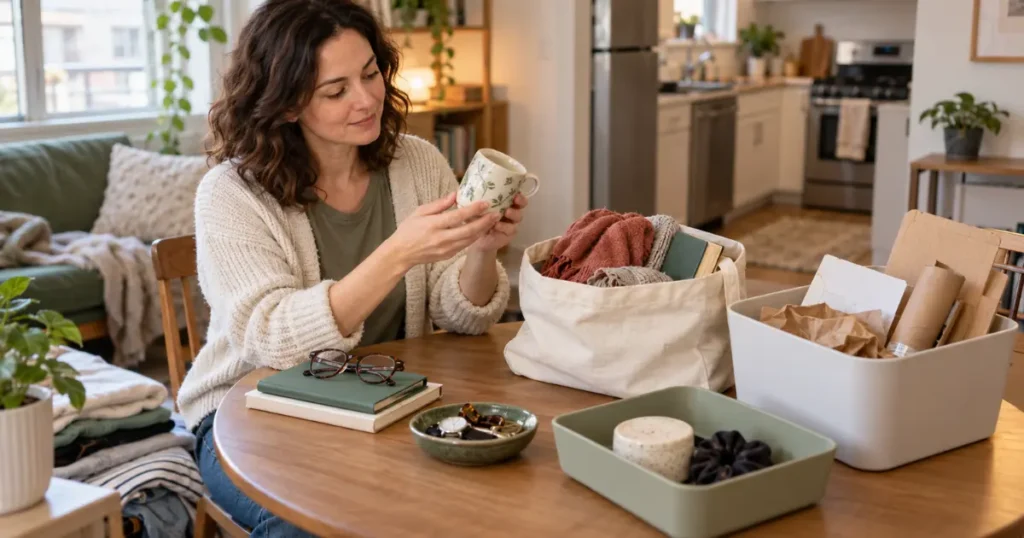
Use bags, boxes, baskets, or other containers already available in the apartment to create a few temporary categories.
Keep What You Need and Use
The keep category is for belongings you still need, use, or genuinely value.
That may include things you use frequently, items needed for current responsibilities, seasonal belongings you realistically use, and possessions with genuine sentimental or personal importance. Keep the sorting containers close to your working area, but out of walkways and doorways.
Do not confuse “keep” with “put back exactly where it was.”
At this stage, you are deciding whether the item remains in the home. Its final location can be reconsidered after the excess has been removed.
Donate or Give Away Usable Extras
Clean, usable items you no longer need may be suitable for donation, giving to a friend or neighbor, or another form of reuse.
Keep expectations realistic. Donation organizations differ in what they accept, and damaged, incomplete, or heavily worn items may not be appropriate.
Instead of assuming a charity will take everything, check the acceptance requirements of the organization you plan to use before transporting a large load.
Recycle or Dispose of Unusable Items
Broken, expired, unsafe, or unusable items generally belong in an appropriate recycling or disposal stream rather than a donation bag.
Regular household trash may be appropriate for some items, but electronics, batteries, chemicals, medications, and other special materials can have different disposal requirements.
Check your local waste, recycling, pharmacy, or municipal guidance where necessary rather than guessing.
The point is to remove clutter responsibly without creating a second long-term pile of items waiting for a disposal plan.
For guidance on common household materials, consult the EPA’s guide to recycling common recyclables. It explains why certain items, including batteries and electronics, may require special collection rather than regular curbside recycling.
Create a Temporary Decision-Later Category
Some decisions are genuinely difficult.
A small decision-later category can keep one emotionally complicated object from stopping the entire session.
The important word is small.
Use one limited box or container and do not allow it to become the default destination for everything you hesitate over. If every difficult decision goes there indefinitely, you have simply renamed the clutter.
Finish the easier decisions first, then return to the small undecided group separately.
Step 4: How to Declutter a Small Apartment One Area at a Time
Once your temporary categories are ready, work through the selected area in a controlled sequence.
Remove only the belongings you can sort within the space available.
Then:
- Decide what stays and what leaves.
- Move donation, recycling, or disposal items into the appropriate temporary outgoing group.
- Set aside items that belong elsewhere in the apartment, then return them to their proper places when you finish the current zone.
- Return only retained belongings to the cleared area.
- Finish the zone before beginning another one.
Suppose you are decluttering one crowded bathroom cabinet. Do not automatically pull everything from the bathroom, bedroom, and hallway because related products exist elsewhere.
Finish the cabinet you selected.
This reduces the chance of turning the entire apartment into an active sorting area.
Completely emptying a room can sometimes feel productive because it creates a dramatic visual change. In a compact home, however, the removed belongings have to go somewhere while decisions are being made. That temporary displacement can block useful furniture and walking space.
Finishing one manageable area at a time keeps the apartment functional while you make steady progress.
Step 5: Decide What to Keep, Donate, or Discard
One of the hardest parts of an apartment declutter is deciding what deserves to stay and what needs to go.
Use practical questions rather than arbitrary rules.
Ask Whether an Item Is Actually Useful
Consider the item’s present role in your life.
Ask:
- Do I use this now?
- Is it in usable condition?
- Does it support a routine, responsibility, or activity I actually have?
- If I needed this again, is keeping it realistic given the space it occupies?
- Would I choose to bring this into my apartment today?
An item does not have to be used every week to deserve space. Seasonal equipment, important documents, and occasional household tools can still be useful.
The purpose is to distinguish realistic future use from vague “maybe someday” reasoning.
Identify Duplicate and Unused Possessions
Duplicate belongings can take up valuable space in a small apartment, especially when they accumulate unnoticed.
Look for categories such as:
- multiple kitchen utensils serving the same function;
- several nearly identical reusable bags;
- duplicate household supplies;
- old charging accessories for devices you no longer own;
- extra decor you never display;
- or backup items accumulated beyond what you realistically need.
Do not assume every duplicate should go.
Two pairs of scissors may make sense if both are routinely used in different places. Several unopened or rarely used versions of the same item may deserve closer review.
The question is whether the quantity matches your actual use and available space.
Handle Sentimental Belongings Without Rushing
Photographs, gifts, inherited items, letters, and keepsakes require a different kind of decision from old packaging or duplicate utensils.
You do not need to discard meaningful possessions merely because your apartment is small.
Instead, consider which belongings hold meaningful memories or serve a personal purpose, and which you may be keeping mainly because the decision feels difficult.
If you are uncertain, set aside a limited sentimental category and review it when you are not rushing through other household clutter.
Decluttering should create a more functional home without forcing decisions you are likely to regret.
Avoid Keeping Things Only Because You Paid for Them
Past spending can make it difficult to let go of something that is no longer useful.
But keeping an unused object does not recover the money already spent.
Consider the item’s role today.
If a kitchen gadget, decorative item, or accessory has not been useful and now consumes scarce space, keeping it may continue to take up valuable space and make everyday essentials harder to access.
That does not mean expensive items should automatically be discarded. Selling or giving away selected belongings may make sense.
The important distinction is between the item’s past price and its present usefulness.
Step 6: Work Through the Main Apartment Zones
Once you understand how to declutter a small apartment, apply the method gradually to the major clutter-prone areas of your home.
The focus here is what to evaluate and remove—not how to build a complete organization system afterward.
Entryway and High-Traffic Surfaces
Start with items that interfere with movement or make arrivals and departures harder.
Evaluate:
- old mail and packaging;
- bags no longer used regularly;
- excess shoes near the entrance;
- receipts and papers with no current purpose;
- and objects that migrated to the entry even though they belong elsewhere.
Keep the doorway and walking route clear as you work.
Kitchen Counters, Cabinets, and Drawers
Kitchen clutter often hides in duplicates and low-use extras.
Look for:
- expired food;
- damaged utensils;
- containers missing usable lids;
- duplicate gadgets;
- excess supplies that take up more cabinet space than you can reasonably spare;
- and appliances or tools that are rarely used.
Do not remove something simply because it is not used daily. Consider how often you cook with it and whether another item performs the same function.
The objective is to free practical working space and reduce crowded storage, not to redesign the kitchen.
Living Area and Multipurpose Spaces
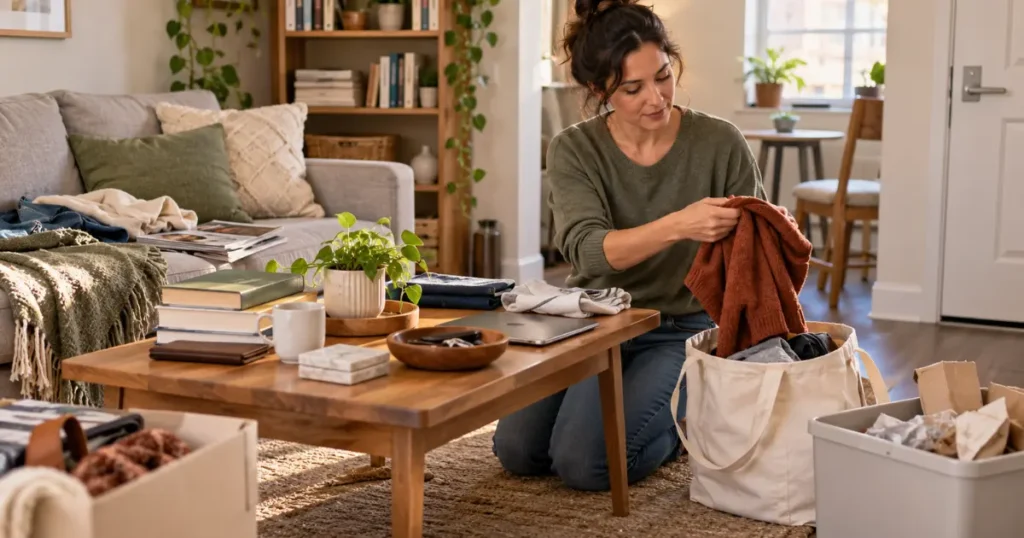
Shared living areas tend to collect belongings from many categories.
Review:
- old papers and magazines;
- decorative items no longer enjoyed;
- unused electronics or accessories;
- abandoned hobby materials;
- packaging;
- and objects that have no reason to live on shared surfaces.
Be particularly selective about things occupying furniture needed for other activities.
A dining table, sofa, chair, or coffee table should not become permanent storage simply because the apartment lacks a spare room.
Bedroom and Clothing
Clothing is often one of the largest categories in a small apartment.
Focus on reduction rather than closet systems.
Review clothes and accessories that:
- no longer fit your current needs;
- are too damaged to wear;
- have gone unworn for a long time and are unlikely to be worn again;
- or exist in quantities that overwhelm the available space.
Keep your actual lifestyle in mind. Work clothing, weather-appropriate items, special-event clothing, and sentimental garments may all deserve different consideration.
Avoid turning this section into a closet makeover. Detailed closet organization comes after the decluttering decisions.
Bathroom and Household Supplies
Bathrooms can accumulate partially used products, backups, empty containers, and items that are no longer suitable for use.
Check:
- empty packaging;
- toiletries you no longer use;
- duplicate products beyond reasonable need;
- worn-out grooming accessories;
- and items whose condition or expiration should be reviewed.
Use appropriate disposal guidance for medications and products that should not simply go into ordinary household waste. For expired or unwanted medications, the FDA recommends using an appropriate medicine take-back option whenever possible. Its drug take-back guidance explains how to find authorized collection locations and other safe disposal methods.
The same principle applies to cleaning and household supplies: keep usable necessities, but do not allow excess backups to consume all available cabinet space.
Closets and Hidden Clutter Spots
Closets, high shelves, and boxes can hide items that have escaped regular review.
Look for luggage you no longer use, empty packaging, forgotten bags, old accessories, unused household extras, and boxes that have not been opened in a long time.
You do not need to design the final closet system during this stage.
Your task is to decide which belongings you still need, use, or value enough to keep in your limited space.
Step 7: Get Unwanted Items Out of the Apartment
Decluttering is not complete when unwanted belongings are placed into bags.
If donation bags sit in the bedroom for weeks, those unwanted belongings are still taking up valuable space.
Create an actual exit plan.
Depending on the item, that may mean:
- taking usable belongings to an appropriate donation location;
- arranging an available pickup where accepted;
- giving an item directly to someone who wants it;
- selling selected possessions when the expected return justifies the time and effort;
- using an appropriate local recycling program;
- or disposing of unusable belongings safely.
For expired or unwanted medications, the FDA recommends using an appropriate medicine take-back option whenever possible. Its drug take-back guidance explains how to find authorized collection locations and other safe disposal methods.
Keep outgoing items consolidated while they wait to leave.
Do not allow bags and boxes to block a hallway, entrance, door, or other route you use daily.
It can help to connect the removal task to a real action rather than an indefinite intention. If you have identified a donation location, decide when you can realistically make the trip. If you are selling an item, give the process a reasonable limit so unsold belongings do not become permanent “for sale” clutter.
The decluttering process is complete only when unwanted belongings have actually left your apartment.
Step 8: Reset the Space Without Bringing Clutter Back
Once excess belongings have been removed from a zone, return the items you are keeping to logical, accessible locations.
Frequently used belongings should be easy to reach. Avoid placing them behind rarely used items simply to create a visually perfect arrangement.
Use the storage you already have before assuming you need more products.
At this point, the goal is only to make the decluttered area usable again. The detailed process of assigning storage homes and building an apartment-wide organization system belongs in a separate guide on how to organize a small apartment.
Do not refill newly opened space just because it exists.
Some breathing room makes drawers easier to use, surfaces more functional, and future clutter easier to notice.
How to Prevent Apartment Clutter From Building Up Again
Decluttering is easier to maintain when you limit unnecessary new belongings and address small clutter problems before they grow.
Give Incoming Items a Quick Review
Before bringing a nonessential item into the apartment, consider whether it has a realistic purpose and place.
That does not mean every purchase requires a complicated calculation.
Simply notice whether you already own something similar, whether the new item will be used, and whether available space can support it.
This is particularly useful for categories that tend to grow quietly, such as decor, reusable bags, beauty products, kitchen gadgets, and inexpensive household accessories.
Handle Small Clutter Problems Regularly
A few pieces of mail on the counter are easier to handle than several weeks of paperwork.
The same applies to bags near the entry, packaging, clothing on a chair, and objects left on shared surfaces.
When you notice a small area beginning to accumulate unrelated belongings, deal with it before it expands into another large decluttering session.
You do not need a rigid daily schedule. Use the rhythm that fits your household.
Revisit Decluttered Areas Periodically
Possessions and routines change.
A category that fit comfortably six months ago may gradually become overcrowded. Items that were useful last year may no longer have a role today.
Occasionally review areas that tend to accumulate clutter and remove what has stopped being useful.
This keeps future decluttering decisions manageable and prevents clutter from becoming overwhelming again.
Keep a Simple Exit Routine for Unwanted Items
Designate one small, out-of-the-way spot for belongings that are ready to leave the apartment.
Keep it small and do not place it in a walkway or near an exit where it creates an obstruction.
Most importantly, pair the container with an actual removal plan.
The purpose is to help unwanted belongings leave—not to create a new long-term storage category called “donate someday.”
Common Small-Apartment Decluttering Mistakes to Avoid
A few common habits can make decluttering your apartment harder than necessary:
- Emptying too much at once. Pulling the contents of several closets and cabinets into a small room can eliminate the space you need to sort safely.
- Buying organizers before reducing clutter. Containers can hide excess possessions without solving the underlying volume problem.
- Moving unwanted belongings from room to room. Relocation is not decluttering when you already know an item should leave.
- Keeping donation bags indefinitely. Outgoing items still occupy apartment space until they are actually removed.
- Waiting for perfect results. Focus on making the space more functional rather than expecting every decluttered area to look professionally styled.
- Decluttering another person’s belongings without agreement. Shared homes require respect for ownership and household needs. Make decisions about your own belongings, and discuss shared items with the people who use or own them before removing anything.
For guidance on making limited space more functional after removing excess belongings, see our guide on how to organize small spaces.
Frequently Asked Questions
Where should I start decluttering a small apartment?
If you’re learning how to declutter a small apartment, start with one area that creates frequent inconvenience and is small enough to finish. A crowded countertop, overfilled drawer, entry surface, or single shelf can be a better first target than an entire room.
Completing one small area can make it easier to start the next decluttering session.
How do I declutter when I have very little floor space?
Avoid creating large floor piles.
Use a small section of an existing table or another available surface to sort a few items at a time, and keep outgoing items in bags or boxes away from walkways.
Finish and reset the selected area before opening another one.
What should I get rid of first in a cluttered apartment?
Begin with straightforward decisions: obvious trash, unusable items, empty packaging, expired products, broken belongings, and duplicates you clearly do not need.
Easy decisions can create breathing room before you tackle sentimental or uncertain possessions.
How can I declutter my apartment when I feel overwhelmed?
Make the project smaller.
Choose one drawer, shelf, or surface rather than thinking about the entire apartment. Set a realistic endpoint for the session and stop after you have completed that contained area.
Reducing the size of the decision can make the work easier to begin.
How long does it take to declutter a small apartment?
There is no reliable universal timeframe.
The amount of clutter, number of occupants, decision difficulty, available sorting space, and time available all matter.
A small apartment is not necessarily quick to declutter simply because it has fewer square feet. Work in manageable sessions rather than measuring progress against an arbitrary deadline.
Should I buy storage organizers before decluttering?
Usually, it is better to first determine what you are actually keeping.
Decluttering may reduce the amount that needs storage, and you may find that existing drawers, shelves, or containers are sufficient afterward.
If you later need an organizer, you will be able to choose it based on a specific category and actual available dimensions.
Final Thoughts: Make Progress One Small Area at a Time
Learning how to declutter a small apartment does not require emptying your entire home or making dozens of difficult decisions in one day.
Start with one area you can finish. Remove belongings you no longer need, arrange to get unwanted items out of the apartment, and reset the cleared area before beginning another.
Completing small decluttering sessions gradually frees up valuable space while keeping your apartment functional throughout the process.
Once the excess is gone, organization becomes the next task. For now, choose one cluttered drawer, surface, or shelf and finish that single area before expanding the project.