Clothing Storage Ideas for Small Bedrooms That Actually Fit
In a small bedroom, clothing has to compete with the bed, dresser, closet, nightstand, and the floor space you need simply to move around. The most useful clothing storage ideas for small bedrooms therefore do more than create extra capacity—they keep clothes accessible without making the room harder to use.
Adding another wardrobe or rack is not always the answer. Sometimes existing dresser or closet space can work better. In other rooms, a compact dresser, carefully placed garment rack, under-bed container, or limited hanging solution may solve a specific problem.
The key is to match the storage method to the clothing itself. Folded T-shirts need something different from dresses that must hang, while seasonal garments do not need the same convenient access as everyday clothes.
This guide focuses on practical options that fit genuinely small American bedrooms and explains when each approach is useful—and when it may create more problems than it solves.
Quick Small Bedroom Clothing Storage Plan
- Identify whether you need more space for folded clothes, hanging clothes, or occasional garments.
- Review your current dresser and closet capacity before adding furniture.
- Keep frequently worn clothing in the easiest-to-reach locations.
- Measure available floor space and furniture clearance before buying a dresser or garment rack.
- Use harder-to-reach storage primarily for seasonal or occasional clothing.
- Keep hooks and door-mounted storage limited to appropriate lightweight garments.
- Protect walking routes, doors, dresser drawers, and access to the bed.
- Add storage only when it solves a clearly defined clothing problem.
Table of Contents
Start by Identifying What Clothing Needs Storage
Before choosing another dresser, rack, or container, identify what type of clothing is creating the problem.
Clothing storage generally falls into several broad groups:
- folded everyday clothing;
- hanging garments;
- seasonal or occasional clothing;
- sleepwear and undergarments;
- and smaller accessories such as belts, scarves, and hats.
Each group has different storage needs.
A freestanding garment rack may add useful hanging space for shirts, jackets, or dresses, but it will not solve a shortage of drawer space for socks and T-shirts. A dresser may be excellent for folded clothing but do little for garments that wrinkle easily when folded.
Also consider frequency of use.
Everyday clothes should generally be easy to reach. Seasonal clothing can tolerate a secondary location, such as a suitable under-bed container. A formal outfit worn only occasionally does not need the same prime storage position as the clothes you reach for several times a week.
This distinction helps prevent a common small-bedroom problem: buying a storage product first and deciding what it will hold afterward.
Start with the clothing category. Then choose the storage.
Make Better Use of Existing Dresser Storage
A dresser is often the most efficient home for folded clothing because it uses one piece of furniture to contain several categories vertically.
Before adding another clothing-storage piece, check whether your current dresser is being used realistically.
Keep Frequently Worn Folded Clothing Accessible
Use the easiest-to-reach drawers for clothing you wear regularly.
Suitable categories might include:
- T-shirts;
- sleepwear;
- socks and underwear;
- casual shorts;
- lightweight everyday clothing.
The exact categories depend on your wardrobe, but the principle is simple: the clothing you use most should not be buried beneath occasional garments.
Avoid packing drawers so tightly that removing one shirt disturbs an entire pile.
If the drawer only works when everything is compressed into place, it has probably reached the point where access is becoming more important than theoretical capacity.
Use Simple Drawer Divisions Only When Helpful
Drawer dividers can help when several small categories continually mix together.
For example, a simple divider may keep socks separate from smaller accessories, or separate sleepwear from everyday tops.
But a drawer does not need a complicated grid of compartments simply because organizing products exist.
Broad categories are usually easier to maintain than many tiny sections.
Try simple grouping first. Add a divider only when it solves a recurring problem.
Know When a Dresser Has Reached Its Practical Capacity
There is a difference between a dresser being full and being unusably overfilled.
Signs that capacity has become a problem include:
- drawers that are difficult to close;
- clothing getting caught when the drawer moves;
- needing to remove several garments to reach one item;
- or piles that collapse every time you get dressed.
At that point, tighter folding may not be the answer.
You may need to move occasional clothing elsewhere, use another existing storage area, or consider an appropriately sized additional clothing-storage option.
The goal is not to squeeze the largest possible volume into every drawer. It is to keep folded clothing usable.
Consider Compact Dressers and Narrow Clothing Furniture
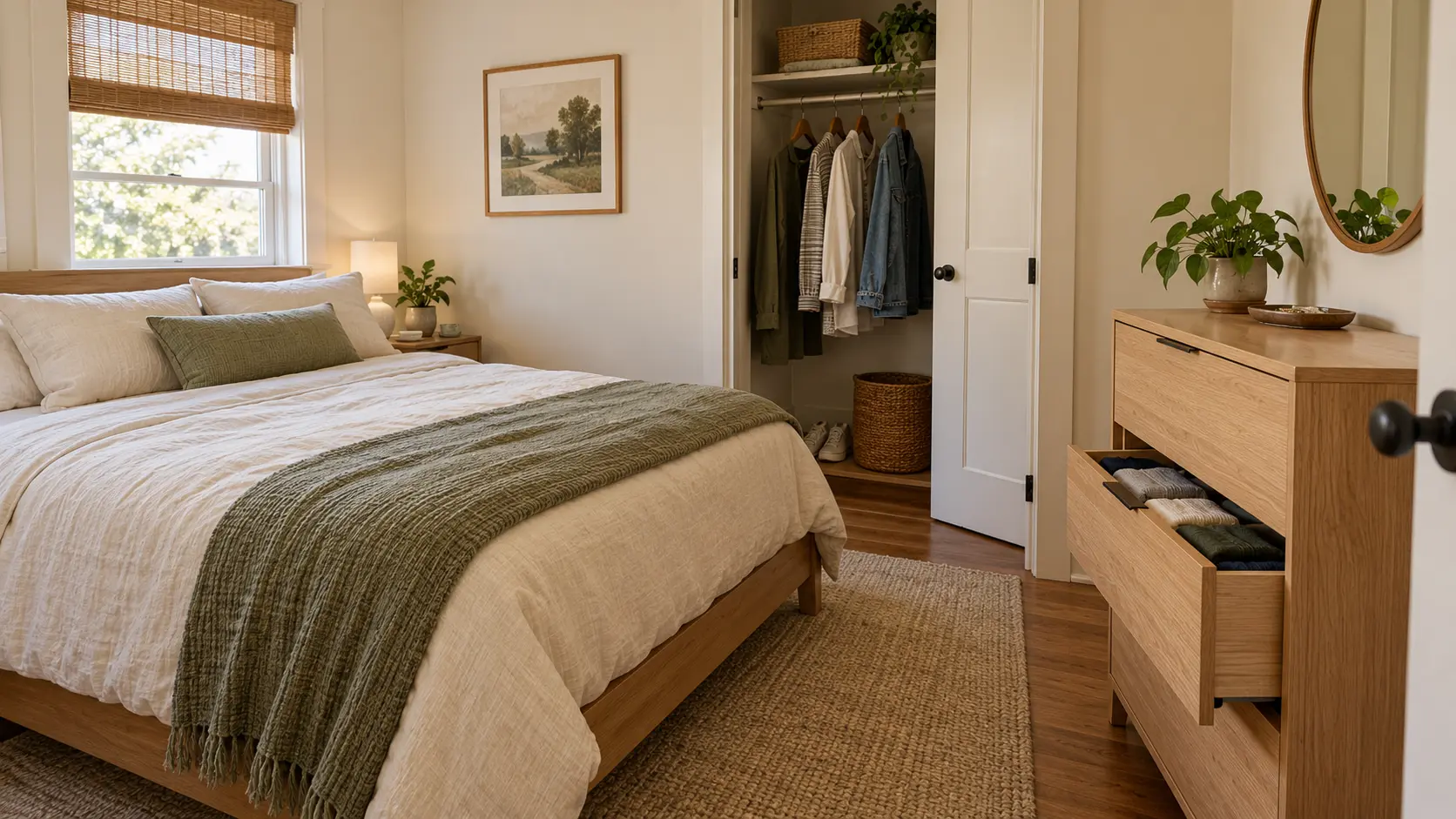
If your current dresser does not provide enough folded-clothing capacity, a compact dresser or narrow chest may help. Among the most practical clothing storage ideas for small bedrooms, a properly sized dresser can add folded-clothing capacity without overwhelming the available floor space.
The important word is compact.
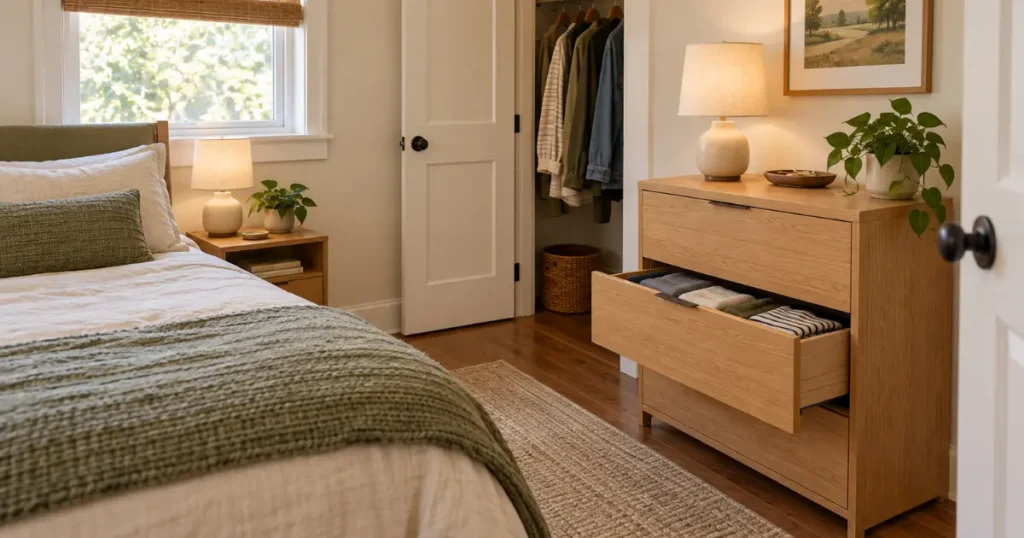
Before adding one, measure the actual available footprint and consider what happens when its drawers open.
A narrow dresser may fit against a wall but still be impractical if an open drawer collides with the bed. A taller chest may use less floor width but should not be assumed to be the better choice solely because it is vertical.
Consider:
- the amount of folded clothing it needs to hold;
- its depth as well as width;
- drawer-opening clearance;
- its relationship to the bed and closet;
- stability;
- and whether it replaces another piece of furniture.
If you already have a dresser that mostly works, replacing it with a slightly better-proportioned piece may make more sense than keeping both.
Tall dressers and other furniture should be assembled, placed, and secured according to manufacturer guidance. Do not treat a narrow footprint as proof that a tall piece is automatically stable. Furniture tip-over prevention is particularly important where children live or visit. The U.S. Consumer Product Safety Commission provides furniture anchoring guidance to help households secure dressers and other potentially unstable furniture.
A new clothing-storage piece should solve a real capacity problem without creating a movement problem.
Use Hanging Storage Without Filling the Bedroom
Some garments are better suited to hanging than folding.
Small bedrooms can still accommodate hanging clothing, but the solution should match the room instead of turning the entire space into an exposed wardrobe. When comparing clothing storage ideas for small bedrooms, consider whether additional hanging space is genuinely necessary before introducing another piece of furniture.
Use Existing Closet Hanging Space Effectively
If the bedroom has a closet, preserve its easiest-to-reach hanging area for clothing that benefits most from hanging.
That may include:
- work clothes;
- dresses;
- button-down shirts;
- jackets;
- or other garments you prefer not to fold.
Avoid filling the most convenient section with clothing rarely worn while frequently used items become difficult to reach.
This article is about clothing-storage capacity, not detailed closet organization, so there is no need to rebuild the entire closet system here.
If the closet itself is the primary problem, a dedicated guide on how to organize a small closet is the more appropriate next step.
Consider a Compact Garment Rack When Needed
A garment rack can add hanging capacity when a bedroom has little closet space or when the existing closet cannot accommodate the clothing that needs to hang.
But it has real trade-offs.
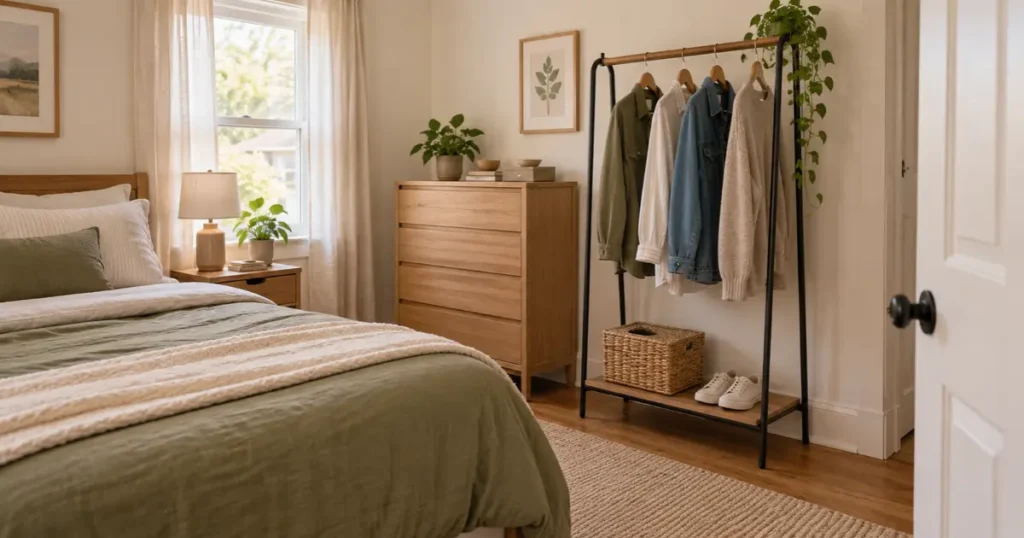
A rack occupies floor space, keeps clothes visually exposed, and requires enough clearance to access garments comfortably.
Before using one, consider:
- whether it fits against a suitable wall;
- whether it blocks the bed or closet;
- how many garments realistically need hanging;
- whether the frame is stable;
- and whether the rack will make the room feel physically or visually crowded.
A restrained rack holding a small group of frequently worn garments can be useful.
A rack packed tightly from end to end may simply move closet crowding into the bedroom.
Use Hooks for a Limited Number of Everyday Garments
A few hooks may provide a convenient place for a robe, light jacket, cardigan, or another frequently used garment.
They work best when the category is intentionally limited.
Hooks become less useful when one garment is placed over another until the lowest item is difficult to reach.
Position hooks where clothing will not interfere with a door, walkway, or furniture.
For wall-mounted or door-mounted products, follow the manufacturer’s installation and weight guidance. Renters should also consider lease restrictions and surface suitability before making permanent alterations.
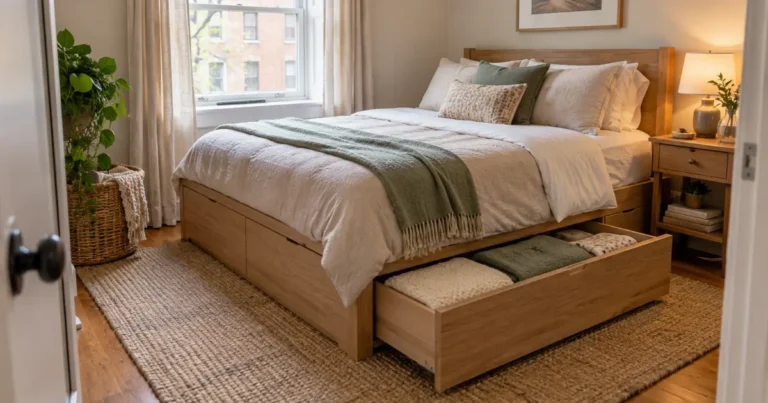
Use Under-Bed Space for Occasional Clothing
Under-bed storage can be useful for garments you need periodically rather than daily.
Good candidates may include:
- off-season clothing;
- spare sleepwear;
- occasional sweaters;
- or other garments that can be stored appropriately for their materials and condition.
Measure the actual clearance beneath the bed before selecting containers.
The container should fit comfortably and be removable without hitting nearby furniture. If it can technically slide under the bed but cannot be pulled out far enough to access the contents, the space is not particularly useful.
Lidded or otherwise appropriately enclosed containers may help keep stored clothing protected from ordinary dust.
Avoid using under-bed storage as the default location for clothes you wear every morning. Daily garments usually deserve easier access.
Also avoid assuming every garment should be compressed or sealed for long periods. Clothing-care needs vary by fabric and construction, so follow relevant care guidance when storage conditions matter.
This is a clothing-specific use of under-bed space. Broader under-bed and general bedroom-storage options belong in the site’s wider small bedroom storage ideas coverage.
If you’re considering a bed with built-in drawers or a lift-up compartment instead of removable containers, explore our guide to storage beds for small bedrooms. It explains how to compare different designs, measure available clearance, and choose a storage bed that suits your room and belongings.
Use Wall and Door Space Carefully for Clothing
Walls and doors can sometimes support a limited amount of clothing storage without another floor-standing furniture piece.
The emphasis should remain on limited.
Suitable options may include:
- a few hooks;
- an appropriate over-the-door hanging accessory;
- a modest wall-mounted rail where installation is allowed;
- or existing shelves used for suitable folded clothing or lightweight accessories.
These solutions can work well for a small category of high-use garments.
For example, an over-the-door organizer might help with lightweight scarves or accessories. A sturdy, appropriately installed hook may hold an everyday robe.
But wall and door storage should not:
- prevent a door from closing properly;
- interfere with closet access;
- narrow an exit path;
- carry more weight than the product is designed for;
- or damage a surface because installation instructions were ignored.
Clothing hooks, hanging organizers, and storage furniture should never obstruct a bedroom escape route. The U.S. Fire Administration’s home fire escape planning guidance emphasizes keeping doors and windows unobstructed so they remain usable during an emergency.
Renters should not assume that every adhesive or removable product will work on every wall finish.
Use the product as intended and check rental restrictions when necessary.
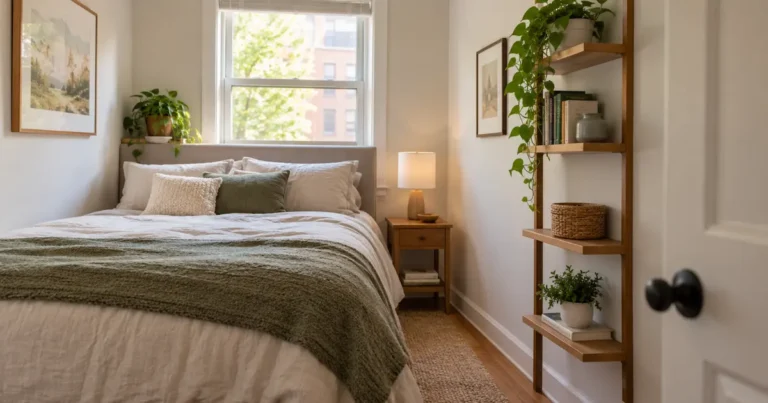
If wall shelving itself becomes the main storage question, detailed small bedroom shelving ideas deserve separate treatment rather than expanding this article into a shelving guide.
If you need shelving for folded clothes, lightweight accessories, or other bedroom essentials, explore our small bedroom shelving ideas. The guide compares floating, corner, bedside, and freestanding shelves, including practical placement and safety considerations.
Find Practical Storage for Small Clothing Accessories
Small accessories often require less space than garments but can create disproportionate clutter when they have no practical location.
Consider categories such as:
- belts;
- scarves;
- hats;
- socks;
- lightweight seasonal accessories;
- and other small clothing-related items.
Existing dresser drawers may be the simplest solution.
A shallow container inside a drawer can keep one small category together if it genuinely helps. Lightweight accessories may also work on appropriate hooks or within an existing closet area.
Avoid creating a separate organizer for every tiny category.
Too many containers can consume the same storage space they are meant to improve.
The objective is to keep similar accessories together and accessible without turning a small bedroom into a collection of micro-storage systems.
For example, several scarves used regularly may share one designated location rather than being distributed between a dresser, door hook, nightstand, and closet.
Simple storage is usually easier to remember.
Rotate Seasonal Clothing Without Overfilling Everyday Storage
Seasonal garments can consume valuable everyday storage even when they will not be needed for months.
If climate and wardrobe habits create clear seasonal categories, consider separating items that are genuinely out of season.
Frequently worn current-season clothing should receive the more convenient dresser and closet positions.
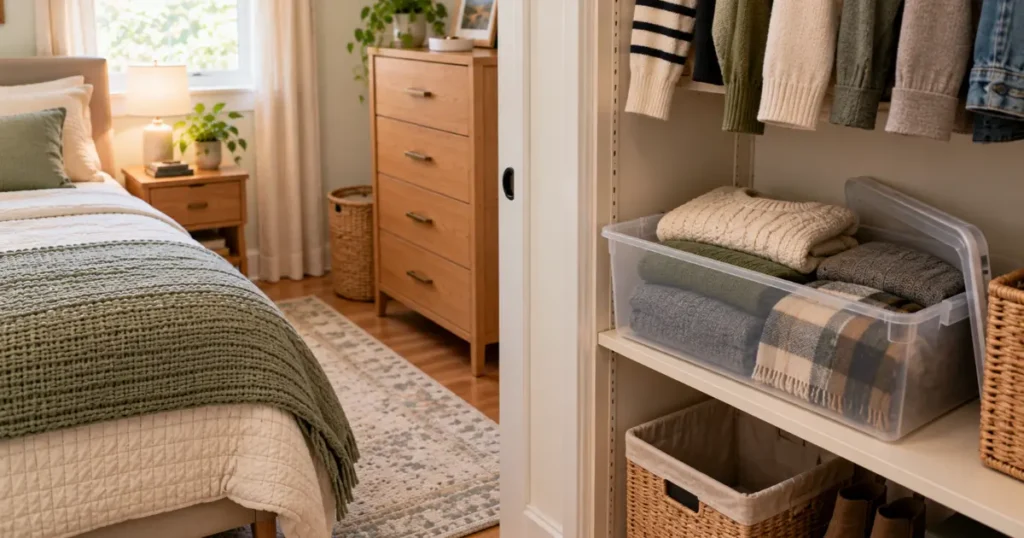
Occasional or off-season garments may be moved to:
- an appropriately sized under-bed container;
- an existing less-accessible shelf;
- another suitable storage location already available in the bedroom or home.
Do not automatically move every garment simply because the season changes.
Some clothing is used across much of the year and may still deserve convenient access.
Before storing garments for an extended period, make sure the storage location and container are appropriate for the fabric and follow the garment’s care guidance when relevant.
Seasonal rotation is useful when it reduces competition for prime clothing space—not when it creates several boxes that are difficult to access or remember.
Clothing Storage Ideas for Small Bedrooms With Limited Closets
A small closet does not necessarily need to hold every piece of clothing.
In some bedrooms, the most practical arrangement is a combination of storage methods.
For example:
- the closet handles hanging garments;
- a compact dresser holds folded everyday clothes;
- occasional clothing uses suitable secondary storage;
- and a limited hook or rack handles a small group of high-use items.
The exact combination depends on the room.
Avoid assuming that limited closet capacity means you need a wardrobe, dresser, garment rack, wall rail, door organizer, and under-bed boxes all at once.
Each additional storage piece occupies physical or visual space.
First decide whether the issue is truly insufficient capacity.
If the closet has enough space but clothing is difficult to find or return, that is primarily an organization problem. If the closet is genuinely too small for the garments that need to hang, an additional hanging solution may be justified.
The strongest clothes storage solutions for small bedrooms combine only the types of storage the wardrobe actually requires.
How to Choose the Right Clothing Storage Solution
The best choice depends on what kind of capacity is missing. The right clothing storage ideas for small bedrooms depend on whether you need more room for folded garments, hanging clothes, or occasional items.
If Folded Clothing Is the Main Problem
Start with the dresser you already have.
Check whether drawer space is being used for appropriate clothing categories and whether occasional items could move elsewhere.
If capacity remains inadequate, consider whether a compact dresser or narrow chest can fit without blocking the bed, closet, or walking route.
Do not add furniture simply because folded clothing exists. Add it when existing drawer capacity is genuinely insufficient.
If Hanging Space Is the Main Problem
Begin with the existing closet.
If clothing that needs to hang still exceeds practical capacity, determine whether a modest garment rack or limited additional hanging option would fit the room.
Consider footprint, stability, access, and visual crowding.
A rack is most useful when it solves a specific hanging-space shortage rather than becoming an exposed storage location for the entire wardrobe.
If Floor Space Is Extremely Limited
Prioritize storage already contained within necessary furniture.
Use available dresser and closet capacity carefully, and consider appropriate secondary areas for occasional clothing before adding another floor-standing piece.
Under-bed storage may help for suitable garments when retrieval remains practical.
Avoid filling every narrow space with furniture merely because the footprint seems small.
If you’re organizing a small apartment and need storage solutions beyond clothing, explore our small apartment storage ideas. The guide covers ways to use vertical space, hidden storage, and multifunctional furniture without unnecessarily crowding your home.
If You Are Renting
Freestanding dressers, modest garment racks, under-bed containers, and suitable over-the-door options can provide clothing storage without major structural changes.
For wall- or door-mounted products, check installation requirements, surface compatibility, and rental restrictions.
Do not assume “removable” means suitable for every wall or guaranteed to leave no marks.
If Seasonal Clothing Occupies Your Everyday Storage
Move appropriate occasional garments away from the prime dresser and closet locations.
Use secondary storage that remains identifiable and accessible when the season changes.
Keep current clothing where it is easy to retrieve.
This lets your best storage locations support what you are wearing now.
Clothing Storage Mistakes to Avoid in Small Bedrooms
Even a useful storage product can make a compact bedroom harder to live in when it does not fit the room or wardrobe.
Common mistakes include:
- Buying a garment rack without measuring. A rack may solve hanging capacity while blocking a walkway or furniture.
- Overfilling dresser drawers. More tightly packed clothing is not useful when drawers stop operating properly.
- Adding too many clothing-storage pieces. Several small products can consume more floor and visual space than one well-chosen solution.
- Keeping everyday clothing in difficult-to-access locations. Secondary storage is better suited to occasional items.
- Overloading hooks or hanging rails. Follow the product’s installation and weight instructions rather than treating every hanging point as unlimited storage.
- Blocking closet doors or walking routes. Clothing storage should not interfere with normal bedroom access.
- Using containers that do not suit the garments. Storage should accommodate the clothing category without making retrieval or appropriate garment care difficult.
- Choosing capacity over usability. The largest possible dresser or rack is not necessarily the most practical option for a small bedroom.
How to Keep Clothing Storage Functional Over Time
Clothing-storage needs are not fixed.
A dresser that worked well last year may become overcrowded after wardrobe changes. A garment rack may gradually collect more clothing than originally intended. Seasonal storage may lose its clear categories.
Review the system periodically.
Look for signs such as:
- drawers becoming difficult to close;
- clothes remaining on furniture because storage is inconvenient;
- a garment rack becoming tightly packed;
- seasonal containers becoming mixed or difficult to retrieve;
- or new storage products being added without older ones being reassessed.
Remove damaged containers or storage pieces that no longer serve a useful purpose.
When your wardrobe changes, adjust the storage rather than automatically adding more.
The most useful system keeps the clothing you currently need accessible while preserving normal bedroom function.
For additional ways to manage everyday belongings and prevent clutter in compact living spaces, explore our small apartment organization ideas, including practical routines for bedrooms and shared areas.
Frequently Asked Questions
What is the best way to store clothes in a small bedroom?
Match the storage method to the clothing.
Use dresser drawers for suitable folded clothes, closet or hanging space for garments that need it, and secondary storage for appropriate seasonal or occasional clothing.
Choose the combination that fits the room without blocking furniture or walking space.
How can I store clothes when my bedroom has very little closet space?
Use the closet for the garments that most benefit from hanging, then supplement it with an appropriately sized dresser or, where practical, a modest garment rack.
Occasional clothing may use suitable secondary storage so it does not occupy your easiest-to-reach space.
Avoid adding several storage pieces unless each one solves a distinct need.
Is a garment rack practical in a small bedroom?
It can be, particularly when hanging capacity is genuinely limited and the rack fits against an appropriate wall without blocking access.
Its disadvantages include using floor space, exposing garments to the room, and potentially creating visual crowding.
Measure first and keep the number of garments realistic.
Can I store clothes under my bed?
Yes, under-bed containers can be useful for appropriate seasonal or occasional clothing when the bed has sufficient clearance and the container can be retrieved easily.
Daily clothing usually benefits from a more accessible location.
Use storage conditions appropriate for the garments and follow relevant care guidance.
What clothing storage works without drilling into walls?
Options can include existing dresser and closet space, compact freestanding furniture, appropriately sized garment racks, under-bed containers, and suitable over-the-door products.
The right choice depends on available floor space, door clearance, clothing type, and rental restrictions.
How can I add clothing storage without making my bedroom feel crowded?
Use existing capacity first, then add only the solution that addresses the specific shortage.
Measure furniture carefully, keep walkways and doors accessible, and avoid adding several separate pieces when one suitable dresser, rack, or secondary storage location would solve the problem.
Final Thoughts: Choose Clothing Storage That Fits Your Bedroom
The best clothing storage ideas for small bedrooms are not necessarily the ones that hold the most clothes. They are the ones that accommodate the right garments while leaving the bedroom comfortable to move through and easy to use.
Start by deciding what kind of capacity you actually lack: folded-clothing space, hanging space, or somewhere for seasonal and occasional garments. Then evaluate your existing dresser and closet before adding anything new.
If another solution is necessary, choose one that fits the physical room as well as the wardrobe.
A useful next step is to identify the clothing category causing the greatest storage problem, measure the space available for it, and compare only the options that solve that specific need.